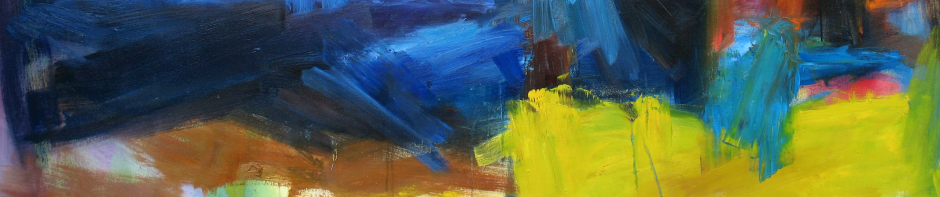
Norbert Marszalek and William Dolan offer a series of interviews with artists on their blog, including a recent one with me. Go to Neoteric Art for the full interview.
Thanks, Norbert!
Norbert Marszalek and William Dolan offer a series of interviews with artists on their blog, including a recent one with me. Go to Neoteric Art for the full interview.
Thanks, Norbert!
John Marin‘s (1870-1953) watercolors, early etchings and a few oils are on exhibit at the High Museum here in Atlanta from now until September 11, 2011. The exhibit was originally organized by the Art Institute of Chicago, Â which offers a good image selection on their site, in addition to themes within Marin’s work and his biography.
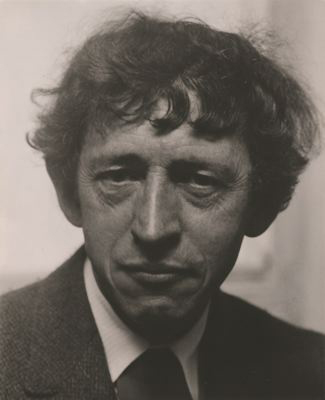
A New Jersey native, in 1905 Marin traveled to Paris and stayed for five years, using his Montparnasse studio as a base to explore Europe. An admirer of Whistler, he sold etchings to dealers in Europe, Chicago and NYC and had the first opportunities to show in public.
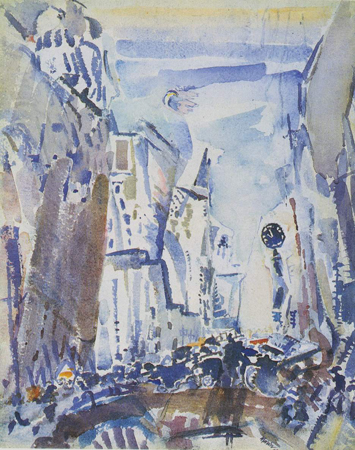
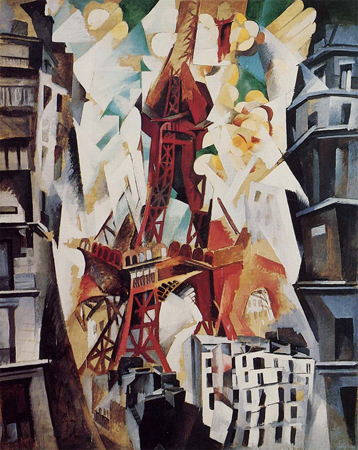
I could see Robert Delauney’s influence in this 1912 painting:Â Movement, Fifth Avenue. Alfred Stiegletz Collection. (all photographs courtesy Art Institute of Chicago, except where noted)
Tour Eiffel, 1911. Robert Delaunay. Solomon Guggenheim Museum of Art.
The show is chronologically laid out, but a few of Marin’s early works are as abstracted as his later pieces. He wasn’t interested in absolute abstraction, as separate from landscape, according to a Kennedy Galleries catalog of their 1981 exhibit, John Marin’s New York. However, the art historian John Baur claimed that Marin’s 1903-04 small oils known as Weehawken Sequence, could have been the earliest abstracts done by any artist either here in America or abroad, if those dates are correct. Roberta Smith thinks the same thing in her February 2011 NY Times article on the series, saying that this “must have given Kandinsky scholars the willies.”
Two are shown below, not included in the exhibit and I can’t find provenance for them except from this writer’s blog.


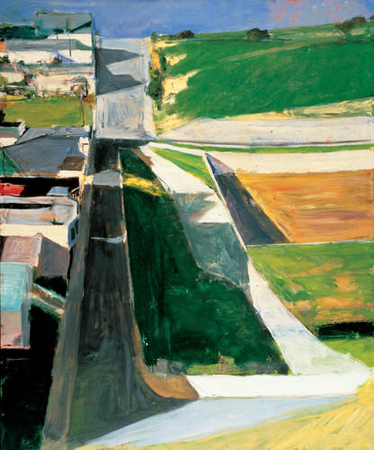
Was Richard Diebenkorn’s perspective flattening 1960’s series of San Francisco cityscapes informed by Marin’s dramatic way with perspective? I’ve never read anything about him attributing Marin as an influence, and yet it would be hard to deny the similarities.
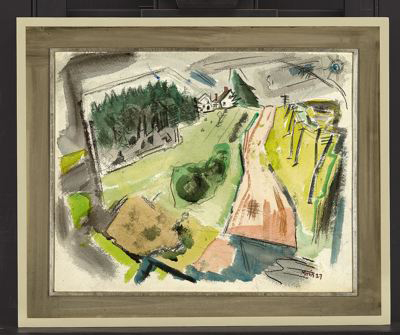
Movement No. 24- Pertaining to Deer Isle – The Road. Alfred Stiegletz Collection.
Richard Diebenkorn, Cityscape 1, 1963. San Francisco Museum of Modern Art.
Marin and his wife Marie Hughes first visited villages on the coast of Maine in the summer of 1914. After that most prolific year, the couple and their one son spent summers in Maine, winters in NY and NJ. In 1933, the family moved into a summer house on isolated Cape Split, Maine – with glassed-in porch on two sides and views of the sea; the perfect studio for Marin. He said, “The house is so close to the water I almost feel at times that I am on a boat.” He worked up until his death at this home in 1953.
Here’s a good video from the Art Institute of Chicago site that describes how Marin gained recognition as the numero uno American artist during his lifetime:
A reclusive artist who didn’t hide his feelings and spoke bluntly, Marin’s ability to express motion in his work precedes the New York Abstract Expressionists by decades. The emotionally charged content of these paintings makes some of the current trends of irony and heavy handed conceptualism seem in contrast, bereft of all feeling and unsuccessful at reaching the viewer.
To  his old friend and patron Alfred Stieglitz, who gave Marin his first show, he once wrote:
It’s been a beautiful world—it is a beautiful world—it’s the only world we’ve known—Our work was done in this world—Our friends have been of this world—and we have fared moderately well and we have enjoyed the living moderately well with some Swell moments.”
Sea Movement- Green and Blue, 1923. Alfred Stiegletz Collection.
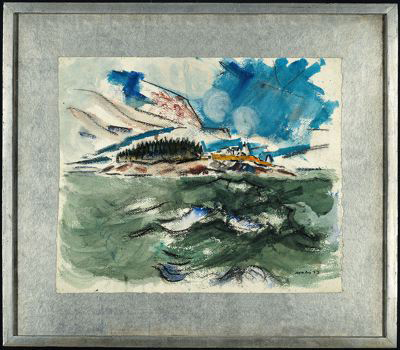
The Sea, Maine. (no provenance from the site this was on)
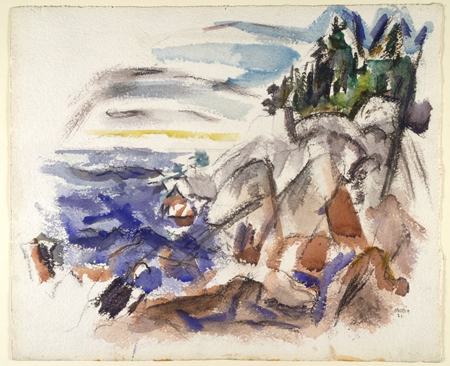
Approaching Fog, 1952. Estate of John Marin.
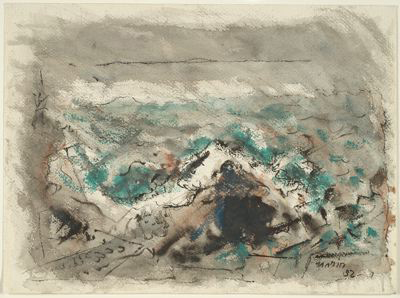
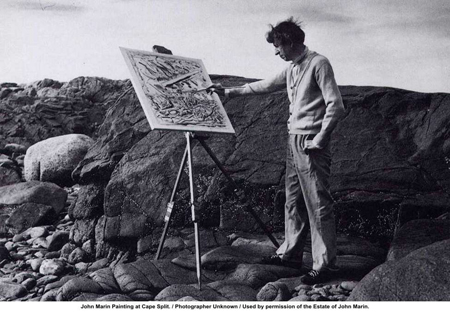
I’m already dreaming about a Cape Split painting trip for the fall….
A few new small paintings for mid summer.
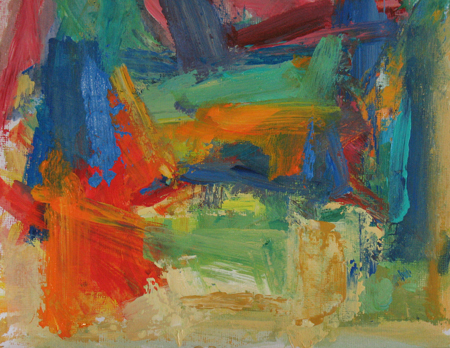
Wheelbarrow. 8″x10″, acrylic on canvas panel, 2011.

Solstice. Acrylic on canvas panel 10″x8″, 2011.
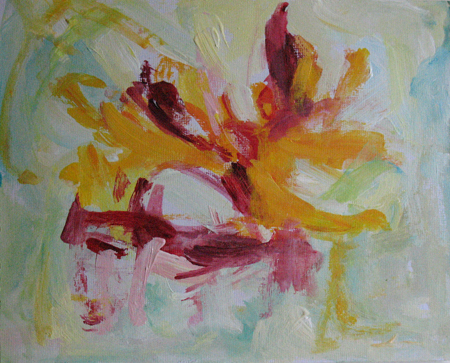
Alhambra. Acrylic on canvas panel, 8″x10″, 2011.
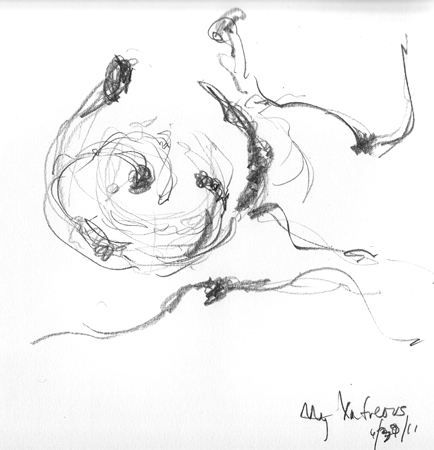
My Vitreous, pencil drawing 2011. A sketch based on a posterior vitreous detachment in my right eye. That eye also has a 20 year old cataract. The floater is called a ‘Weiss Ring’ and is quite amazing to look through. It’s like a mesh veil with a dark brown circular area that has radiating spokes, partially obstructing vision in that eye. I’m working on a new painting that is based on this experience, while listening to John Tavener’s ‘The Protecting Veil’, with YoYo Ma on cello.
Atlanta’s Woodruff Arts Center presented Sonic Palooza yesterday, June 25th, a 10 hour free festival of contemporary music that went on until midnight.
I spent an hour or so over in the galleria and caught the first program; Steve Reich, David Lang, Tristan Perich and Philip Glass. All compositions were performed by Sonic Generator & Friends, a Georgia Tech ensemble in residence founded in 2006.
My little Canon caught some rough clips of the performances, of which I’ll include truncated versions below.
David Lang – Press Release, perfomed by Ted Gurch.
Steve Reich – Nagoya Marimbas, performed by Tom Sherwood and Charles Settle.
Tristan Perich- A/B/C/D, performed by Jessica Peek Sherwood.
My favorite was the piano piece by Philip Glass- Mad Rush, performed by Tim Whitehead.
And Glass himself plays the same piece from the television production Two Moon July (1986). A friend took me to see him play a lengthy composition at Emory in the early 1980’s, and I recall being impressed with his stamina.
A first for Atlanta, this marathon should raise the profile for the composers and young musicians in the area who play contemporary music. The turnout at the event’s 2 pm start time was fairly good; about 50 rapt people (and kids) in the audience.
San Francisco has a strong audience for new music, thanks to Michael Tilson Thomas, the SF Symphony’s brilliant Director. He presented his second edition of American Mavericks in the summer of 1997, a year after I had moved to the city. I remember being blown away by Steven Mackey’s guitar and Lou Harrison’s piano; his 80th birthday was celebrated during that program.  Tilson’s inaugural marathon was repeated in 2000, albeit in a shorter program.
My friend, music and WSJ’s cultural critic Steve Dollar, had tickets courtesy of his pal Tom Welsh at New Albion Records, a longtime label out of San Francisco that promoted new contemporary music. Welsh has gone on to be Music Director of the Cleveland Symphony, and Foster Reed moved to upstate NY a few years ago.
Here’s hoping that Atlanta’s music lovers will support efforts to bring innovative and exciting new works of music to the city.
A few new small paintings in acrylic that I haven’t yet posted about. I like doing these small works and have gessoed several more panels. Acrylic isn’t as luminous as oil, but cleanup time is much faster and there are no fumes. Summer is the perfect time to use water based paints.
One was sold as soon as it was finished. I may go against habit and work on a series of these. All inspired by tree peonies and poppies, specifically the magnificent specimens sold by Klehm’s Song Sparrow Nursery in southern Wisconsin.
Savage Splendor. Acrylic on canvas panel, 8″x10″, 2011.
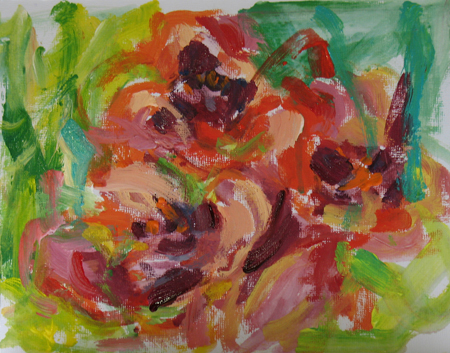
Papaver Orientale. Acrylic on canvas panel, 8″x8″, 2011.
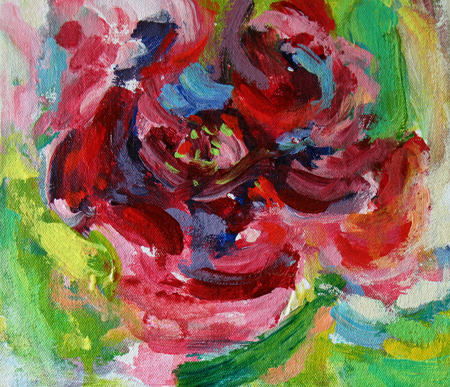
Cytherea. Acrylic on canvas panel, 8″x8″, 2011. (sold)
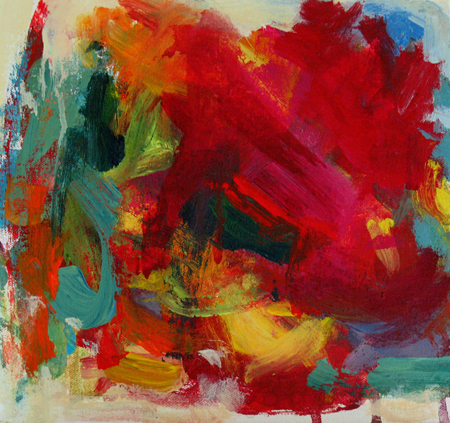
Since the end of May we’ve had temperatures in the 90’s here in Atlanta. Even so, a few nights have been blissfully cool, when the windows get opened after dusk, my attic fan goes on and the AC units get turned off. Shaded by the huge water oak and a few old pecan trees, this little house stays surprisingly cool at night from that whole house fan, even in the dog days of summer.
Window units are both cheaper to run and a greener way to use air conditioning. Mr. Electricity says so, that’s who.
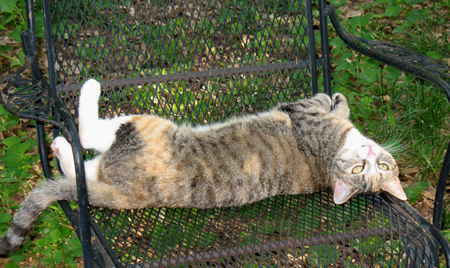
In 1971 Sam Wells gave a handmade book of his poetry to my sister Gina. This is one of the poems:
Asa Whitney’s Dream
Sometime, maybe
I’m gonna ride on Asa Whitney’s dream
and check out Walt Whitman’s land
and find me a silver mine
….
Come with me, honey
an’ we’ll find out what those singing wires
were all about
And we’ll watch the semaphores
and all the signs
in the night
and drink Hot sun
all day.

photo courtesy Jay McDonald.
We knew Sam and his brother Johnny from the time we were toddlers living in New Hope, PA. He always claimed (with that mischievous smirk) that he had watched my sister and myself running around nude under a sprinkler. My sister thinks we were watching the naked brothers instead.
A few years later, both families moved to Princeton. I lost touch with Sam after high school, but when my old Princeton High School pal Marty Heitner emailed to say that Sam had won a Guggenheim fellowship in 2003 for his film work, I reached out to congratulate him.
And from that point forward, Sam and I were in touch fairly often. I was living in West Chester, PA from 2004-2010 and when my sister came up to visit in 2006, we met Sam for lunch in Princeton. He took us on a mini tour of the town we’d both left behind. It was my first trip back in over 35 years and the town was both changed and unchanged. A new espresso shop that Sam called his ‘front porch’ was Small World, where he hung out daily and caught up on the daily news.


Our childhood home, walking the long driveway into the backyard. Sam gamely went along to bolster our spirits. 8 Hamilton Ave was within three blocks of where Sam lived when we were in high school.
I invited Sam to my opening at Viridian in Chelsea in February 2007, where he first met Ali Hossaini, an old friend of mine from San Francisco, now relocated to NYC.


As always, Sam was most animated when he was talking about film or his own work.
Also attending the opening were my other dear friends from Princeton days; Marty Heitner and his niece Rachel Gardner and son Gage, Libby (Wert) Crowley and her husband Bill.
In a December 2006 email, Sam described a new piece he’d been working on and had recently won a grant from the NJ Council for the Arts. In March of 2007 he would show the work in an exhibit at the Ben Shahn Galleries at William Paterson University in Wayne, NJ:
I’ve just done another section of Fragrance Of Ghosts, called “Kieu” (named for the famous Vietnamese poem “The Tale Of Kieu”) and —it’s what I’ve wanted to do for 30 years and finally, finally I’ve done it. I didn’t know it ’till I saw it, but there it is.
And this was his email for the invite to the show:
I’ve done the first two parts of my Vietnam project “Fragrance Of Ghosts” as a digital installation piece, it’s 16mm film transferred to High Definition, worked on with layering, compositing etc – and will show as a continuing loop in a dark space I created in the gallery, on an Apple 23″ display used as a sort of animated canvas so to speak.
It was a gorgeous looping clip that deserved a quiet space in a museum. Dark, mysterious, and non-narrative, it had the feeling of alienation and at the same time, a reunion. I remember a lovely, young Asian woman standing/walking on a bridge over water. Then she was double exposed and there were twins. As abstract as Monet’s late paintings of Giverny, with green the predominant color, fronds of bamboo bordering the frame edges. Sam portrayed Vietnam’s dense, tropical heat without being literal. The din of the opening competed with the mystery and quiet contemplation that this piece offered to the viewer.
Sam had wanted to get more involved in digital imaging and editing programs, like Photoshop and AfterEffects and I helped to make that possible. He loved to experiment with new technology that he hadn’t used before:
I want layers bubbling and moving, things flying…
Here are some shots from August 2007 when he was first fooling around with Photoshop:
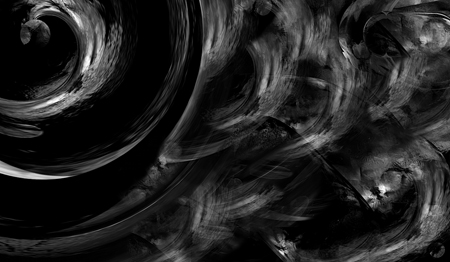

A later series of photographs called ‘Orphic’ include water and are darkly poetic. One still that he emailed me in early December of 2008 is titled ‘Self Portrait’ or ‘Phoenix’. Our parry went:
me being literal: …thrown in the towel or something to that effect?
Or figure floating face down in water. Although an optimist could see an angel  😉
When I asked where he had shot this, he answered:
On Sunday, in my “Zone” (after Andrei Tarkovsky’s great “Stalker”) which is in the post-industrial wilds of Morrisville PA. A great location, I shoot there every time it’s heavy rain —- my new film is morphing towards shooting there, it’s “found its home there” since I discovered it in late September….What I’m doing now is far beyond what I’ve done before…
I agreed – these were  tragic, romantic and ironic all at the same time. Sam told me that he didn’t pose these compositions, but found the subject during his scouting. And he waited for the water to do its magic, and then shot.
There is an article about the genius of the director Martin Scorsese in the July issue of Harper’s magazine, Scorsese on the Cross, America’s last best tragedian, by Vince Passaro. He suggests that Scorsese’s consistent emotional theme is isolation and that his greatest gift may be his ability to ‘uphold the tragic vision’ in our culture. He goes on to explain that “Tragedy is inherently, necessarily, uncompromising. And it makes much of the audience squirm with its painful and paradoxical insistence that our lives are ruled both by individual agency and the iron dictates of society, family, and fate.”
Sam could be compared to Scorsese in that regard. His work is tragic (especially Wired Angel), isolationist and his later works that focused on Vietnam offer an obsession with a culture entertwined with America’s in a love/hate relationship.
A doll’s head encircled by plastic bags that look like surreal and magical jellyfish. Water with eddies impossible to discern fully, fallen branches in the upper quadrants, surface raindrops, and more foliage edging out from the frames into the scenes. In high definition these are incredibly beautiful, but detail is lost through the compression needed for this blog template….


He agreed to go with me for our 40th PHS reunion in June of 2008 -Â Marty Heitner and I went over to Sam’s apartment before the festivities to view his latest work and see his impressive setup. He talked about how proud he was of his daughter Julia, in Rutgers studying public health at the time and he spoke about his parents; two early computer engineering whiz’s.
On a second trip in July of 2008 Sam took Ali and myself on the ‘avant’ tour of Princeton. I wish I had a recording of that day – Sam told us about his great uncle, John Notman, an architect from Philly who had designed Prospect House on the campus. His anecdotes about what used to be versus what had changed in the town were both poignant and practical. Sam didn’t live in the past, but history was important to him for how he viewed the present.
Ali had been an Executive Producer with Rainbow Media and at the time was helping to produce a series of experimental video and film for the internet TV network, Babelgum. I felt that Sam’s work could bring much needed gravitas and production value to the series, but unfortunately he didn’t get into one of their competitions – showing a lack of the jurors’ own visions. Sam was prescient prior to the event, saying: The new movie is beautiful but who (would want it) these days… it’s not American Idol.
I have an earlier post of the Princeton trip with more photos.


The last photo is of a snippet of Sam’s face and Princeton Cemetery, where my father, who died at 60 in the summer of 1971, is buried.

This was the last time I saw Sam. He was on the verge of being evicted from his apartment, and I was newly unemployed from my tv gig, planning on a return to Atlanta if I couldn’t find a job in the northeast. We were both struggling. During 2009 and 2010, he emailed sporadically, mostly I saw his posts on Facebook. I was happy to see that he was involved with new work and had developed a relationship, but apparently money issues were still plaguing him.
A December 2010 Christmas ‘card’ of his work called ‘Nativity’.

Last week I learned that Sam had throat cancer that had metastasized into his lungs. He had ended up in the ICU at Princeton Hospital, dying unexpectedly on June 3Â before he could get treatment. An outpouring of grief and shock from friends on his Facebook wall helped to staunch the pain.
Sam did what a lot of people would really like to do but aren’t brave enough; he devoted himself entirely to his work and became the consummate artist, breaking through personal barriers on his journey. Money, health, stability – nothing was as important to him as developing his vision. The independent film and art world is his work’s true home. May it live on and create as much joy and wonder for others as Sam created for himself.
Several friends posted recent photographs on Sam’s Facebook wall. Some are shown here courtesy the photographer Michael Cohen.
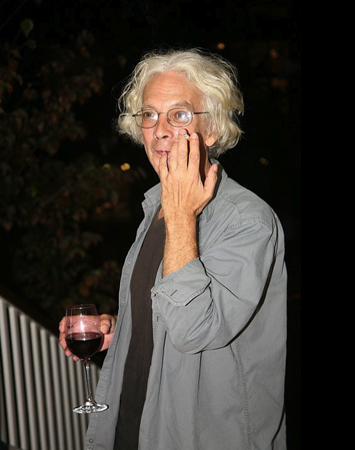


With the hands of a sculptor and the grace of a dancer… Sam’s elfin and determined self from my 1968 Princeton high school yearbook.

Reviews of Sam’s work here.
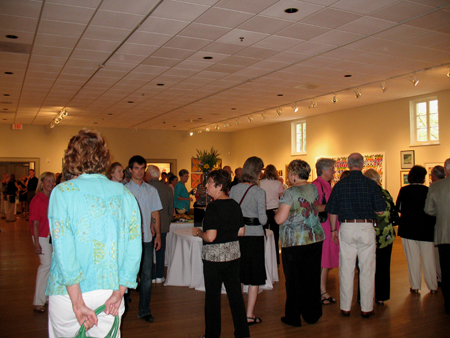
Last night was the opening for the Quinlan Arts Center’s ‘Sound Off’, a juried exhibition of about sixty works of art inspired by music. In operation for more than 60 years, the Quinlan began as a sketch club in 1946 and has grown into a renowned regional arts organization. The exhibit will be up until August 13th.
The arts center is located on historic Green Street and while I didn’t get shots of the area, I found these lovely photos on Flickr by Robert Lz. Worth an hour’s drive north, just don’t go at rush hour.
Here are some shots from the opening. I spent some time talking to a few artists and one of the curators, art historian Ana Pozzi-Harris. The other curator, John Amoss, happened to be playing guitar in the band.


my painting Blues for Ravel, oil on canvas panel, 11″x14″. Inspired by Maurice Ravel’s Sonata for Violin and Piano, a late composition from 1923-27. He experimented with the jazz influenced second movement ‘Blues. Moderato’ and was himself influenced by American Blues and George Gershwin’s work.



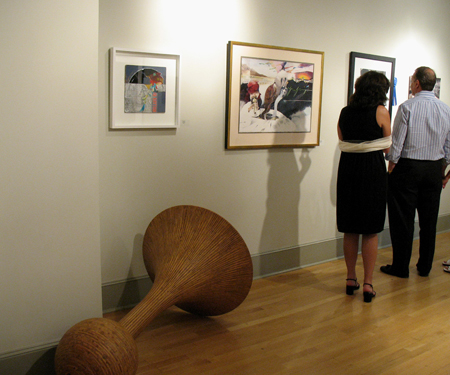


My favorite piece in the show was Joseph L. ‘Doc’ Johnson’s Bango Drum. Mixed media. I talked to Doc at length about not just art, but his archaeological findings of early artifacts in the area. A limestone kiln was discovered in 2007 near Gainesville and this comprehensive article defines archaeology and describes the challenges of protecting Early Georgia sites. This link offers information on the timeline of early human activity in the Southeast.

Another interesting work was Marsha Richter’s Garden Mandala Quartet.

First prize winner Hyoungsesk Kim and his painted plywood sculpture, Embryo.

The HoboHemians played backup to the crowd’s hum with Django Reinhardt’s Hot Club renditions and other bouncy tunes.


Parking lot sculpture.

Yesterday was almost too hot for an outdoor arts event, yet my friend Arthur (aka Theo) and I walked the full length of the Virginia Highland Summerfest. Secret to not melting in a swoon; go as early as possible and grab the free mini drinks at various juice and ‘smart’ water promotional booths. Early June and already 95 degrees? September seems far, far away in the distant future.
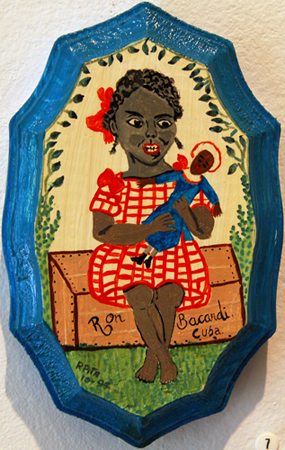
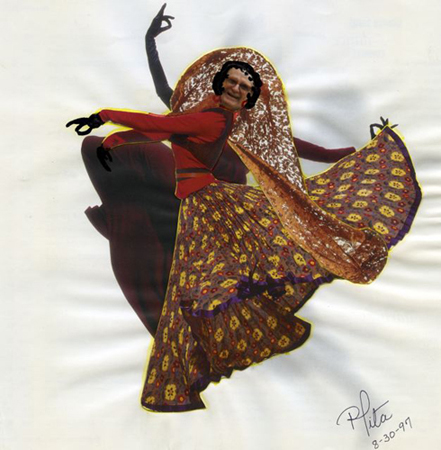
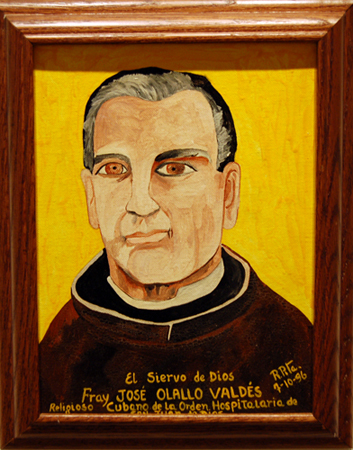
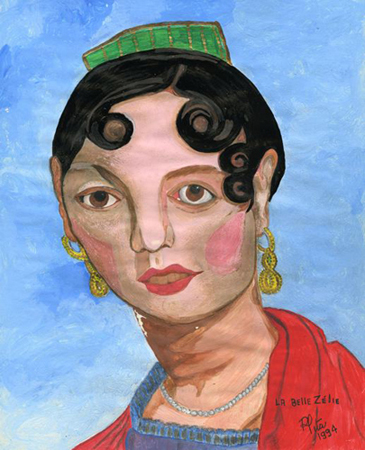
We then drove a few more blocks to see the last day for the exhibit of Cuban born, self-taught artist Rosenda Pita, at Barbara Archer Gallery on Elizabeth St. Archer’s gallery is in the Inman Park neighborhood and focuses on self-taught and contemporary artists. It’s a small, compact space  and the red exterior matches Archer’s elegant business card.
Pita’s estate is being handled by his nephew, and prices are shockingly reasonable. He used those little decoupage wooden display panels you can get at Michael’s for some of his small works, others were created on wooden trays and boxes. There is obvious glee in the double portraits of himself and his partner in dance poses with mantilla and hat. A fun show to see.
the interior of the space with an earlier exhibit:
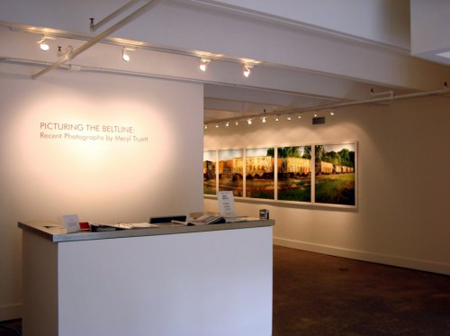
All Pita photos courtesy the Barbara Archer Gallery:
The Price is Right was the latest exhibition at the Swan Coach House – all works under $1000. Another last day, I saw my Etsy pal Ande Cook’s flower paintings but missed a few sculptural works that had already been picked up. Few works sold, but the space is intimate and longtime Atlanta curator Marianne Lambert added some interesting pieces to the mix.
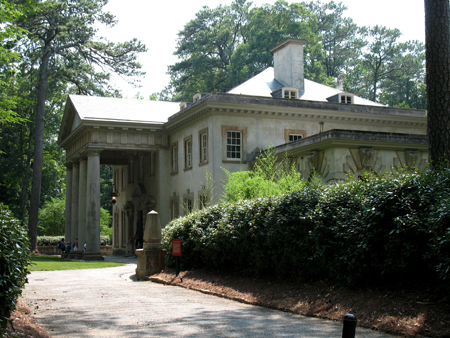
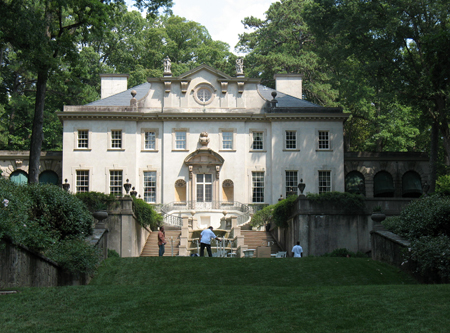
The 1928 Swan House, managed by the Atlanta History Center, has been nicely preserved and now offers guided tours of the interior. Designed by Phillip Trammell Shutze, a well known Atlanta architect and art collector, it has an Italian feel and sweeping terraced garden design based on the Villa Corsini in Rome. (this blog has the best photos I can find of Corsini)
I took my mother  here in the early 1980s for tea, but seem to recall that renovation was going on at the time of our visit, the interior was off limits.

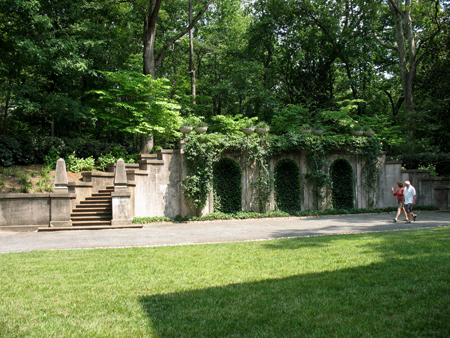
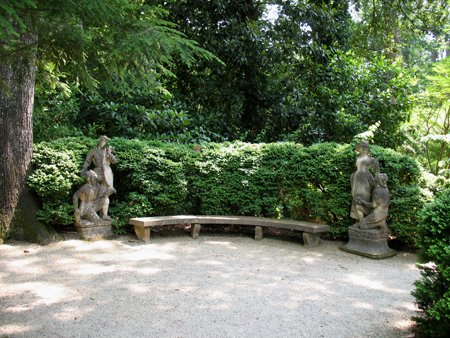
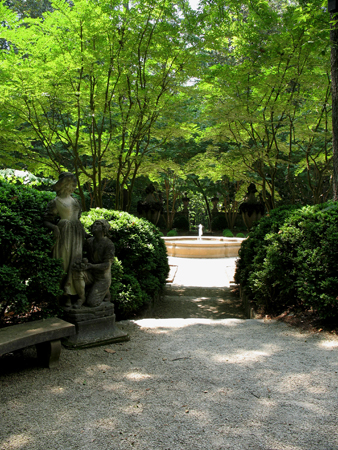
someone liked romantic garden statues.
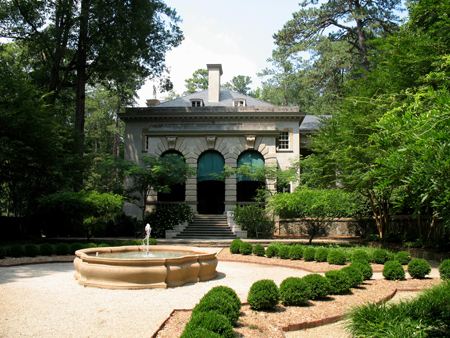
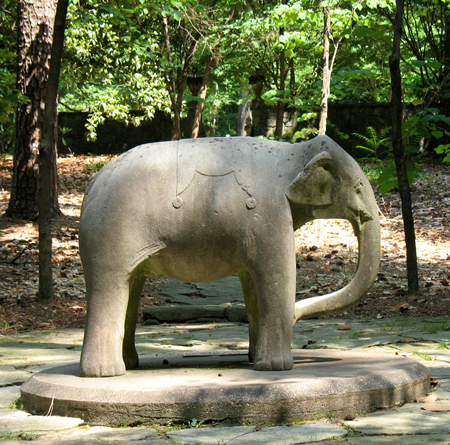
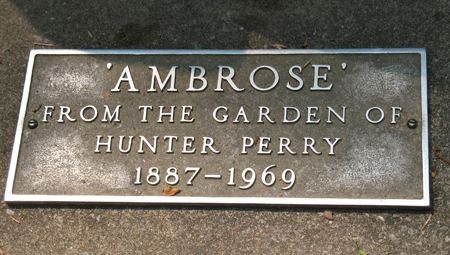
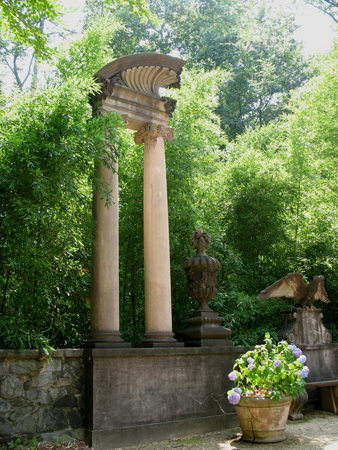
This is about as big as the new ‘small house’:
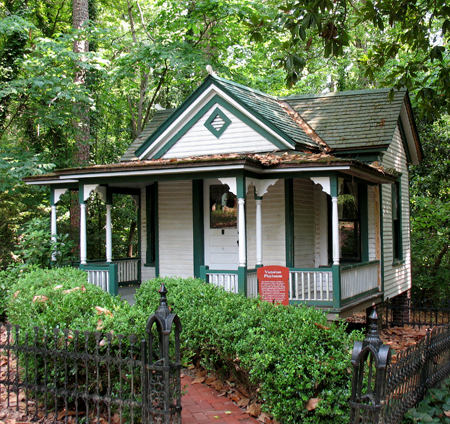
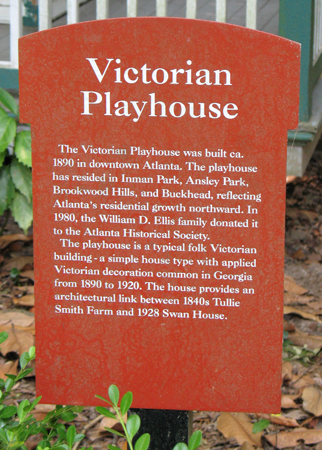
there was a wedding event being set up on the back lawn.
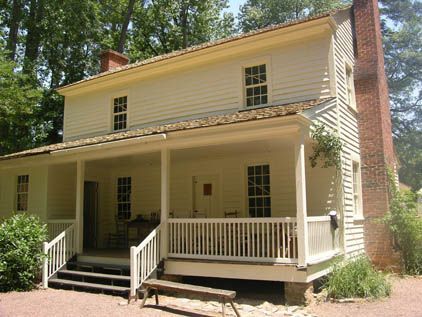
I’ll be returning for the tour of the interior and of the Smith Family Farm when I have more time.
Stay tuned for my next post about the Quinlan Arts Center’s ‘Sound Off’ exhibition, art inspired by music, including my painting Blues for Ravel. Looks like there’ll be music and everthang at the June 9th opening from 5:30 to 7:30.
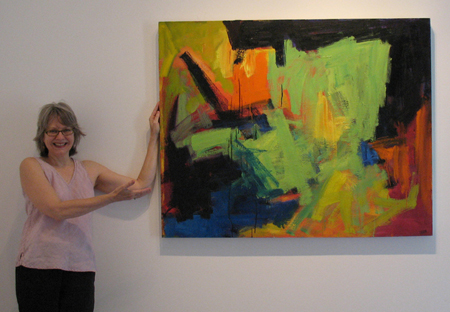
The Decatur Fine Arts Exhibition at the Dana Fine Arts Building on the Agnes Scott campus, runs in tandem with the city’s annual Arts Festival from Memorial Day weekend to June 5th. Curated by Dalton Gallery’s director, Lisa Alembik, the show was juried by Flux Projects Executive Director Anne Dennington, ceramicist and instructor Rick Berman and artist/professor Gail Vogels. My painting ‘Green Tomatoes’ was chosen for inclusion in the show.
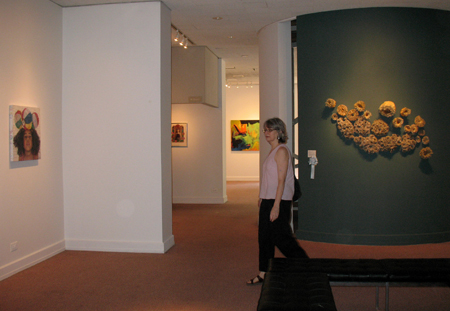
The opening last Tuesday evening was packed with the Decatur business community and city officials, and lavishly catered by local restaurants and breweries. Yesterday my sister and I visited the exhibit before we hit the now huge (and hot!) outdoor arts festival on the square.
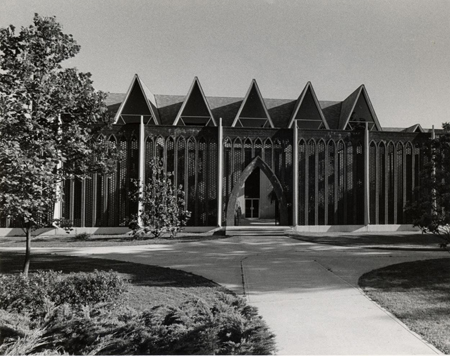
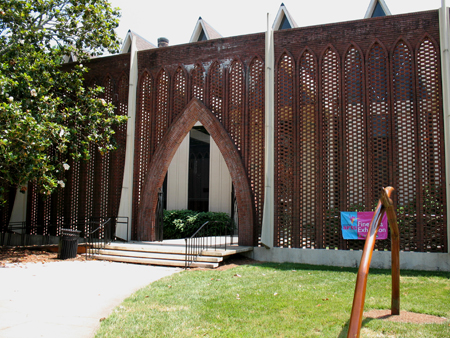
I especially liked the space, designed in 1965 by John Portman, the Atlanta based architect. While most of his work during this period is flashy and has been accused of lacking integration with its surroundings, this one succeeds. The building echoes the Gothic revival style of other structures on campus. Spread over four areas that flowed together, the artwork was spaced nicely to afford the eye some breathing room.
‘Green Tomatoes’, 40″x50″, oil on canvas. With my sister, Gina Webb, a writer here in Atlanta who has worked as a music critic, book editor and reviewer and now has her own blog.
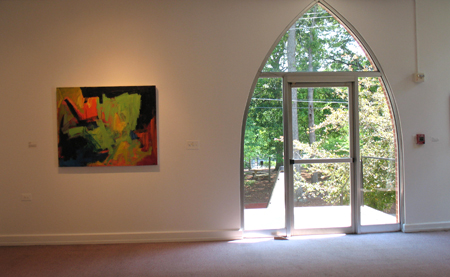

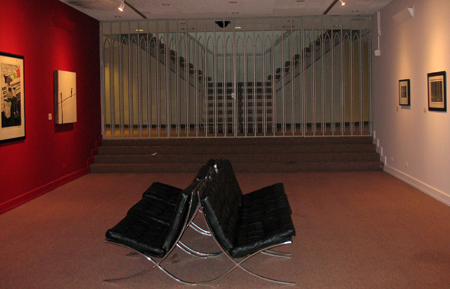
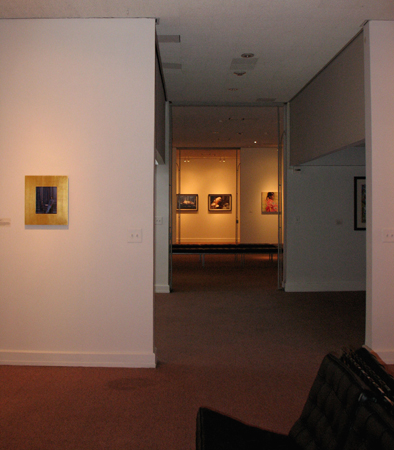

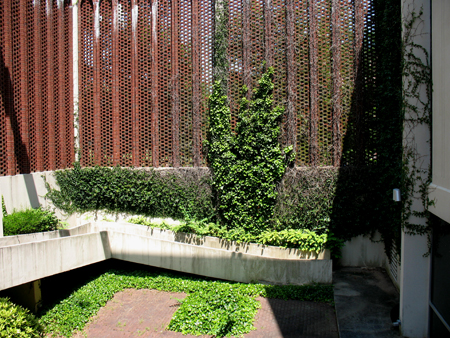
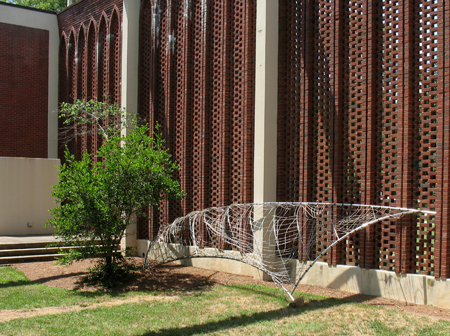
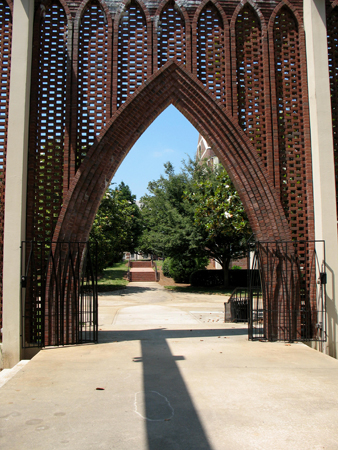
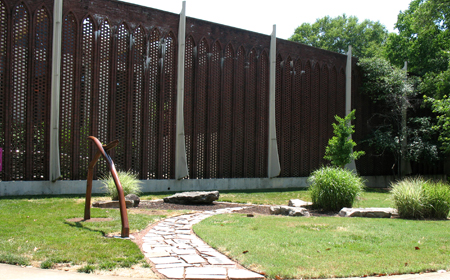
If you go over to the exhibit, be sure to look for the two large gingko trees standing next to the parking lot in front of the building. They are exquisite specimens.
It’s hot here in Atlanta at the end of May. Upper 80’s, 90 degrees with no rain for the garden in the last two weeks or more. Friends have warned that the heat intensifies and continues until September. I lived here for twenty years without air conditioning, but after being away for almost fifteen, the southern climate is a shock. A good reason to keep as many trees around as possible.
Meanwhile, a couple of new paintings.
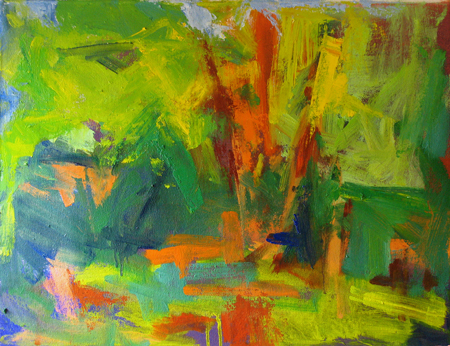
Study in Green. Oil on panel, 16″x20″ 2011
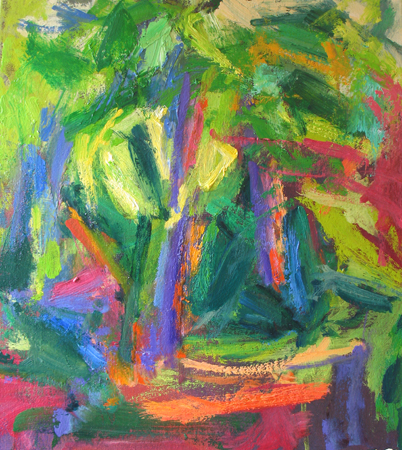
Arbor. Oil on canvas panel, 16″x14″ 2011.
Afternoon doldrums in the studio.