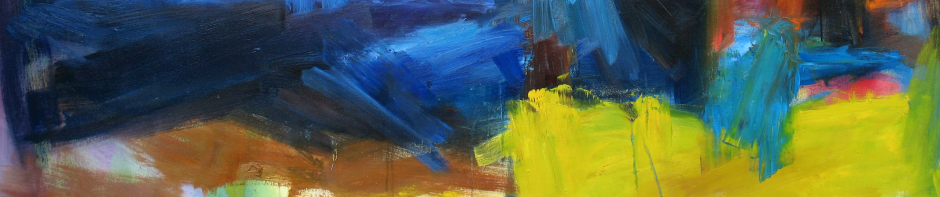

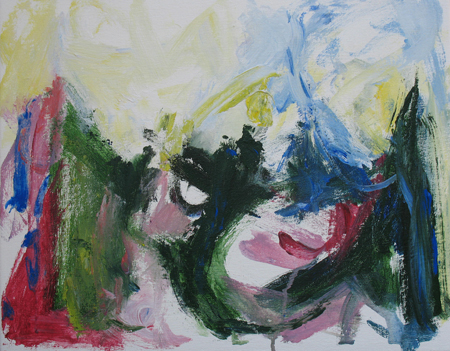
Hommage Aux Pommes. Acrylic on canvas panel, 14″x16″ 2010.
Hommage Aux Pommes. Acrylic on canvas panel, 14″x16″ 2010.
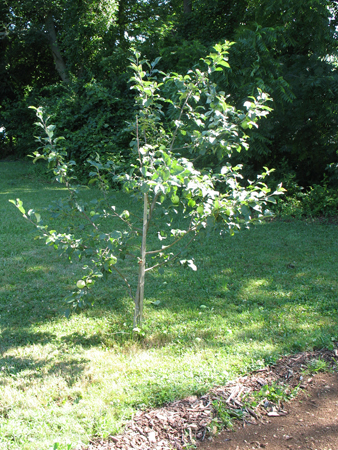
Yesterday afternoon my neighborhood came through a freak storm of high winds and heavy rain, but despite not losing power, or having a tree fall on the house or car as some in the area suffered, I lost one of my beloved apple trees. This morning I found the 4 yr old semi-dwarf Liberty thrown to the side border, its trunk snapped clean at grass level and apples scattered all over the area where it once grew.
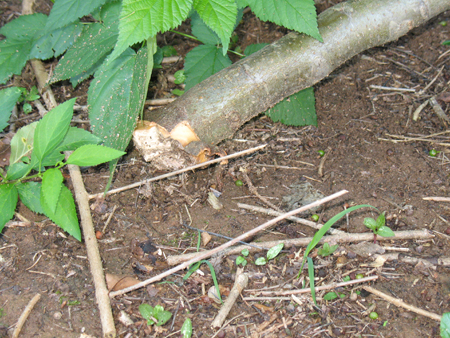
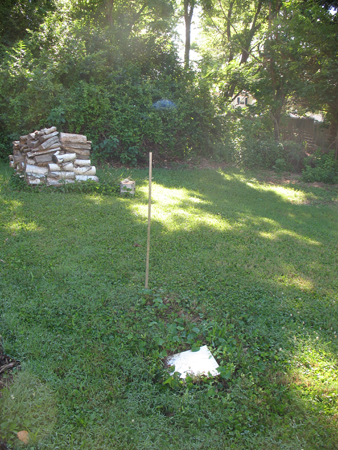

I’m sad, because this is the first season that I’d sprayed both trees with fungicide and they were both producing heavily and seemingly finally healthy; free of most cedar rust and scab that have plagued them for their young lives.
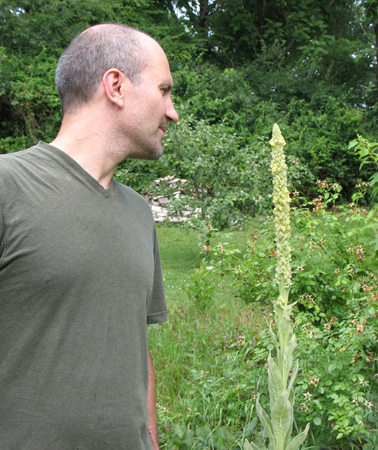
Ali had come out for a couple of days to help with yard work. This is the way the tree looked before his visit – it’s directly behind him. He’s eyeing a tall mullein (verbascum) ready to burst into bloom.
I guess now I’ll be making an apple pie or crisp, there’s not much else to do with green apples. Amazingly the Dutchess tree survived unscathed. This is probably its last year to fruit since it now has no pollinating helper.
On a more upbeat note, the yard is finally mulched with Ali’s help! All is neat and tidy instead of wild and ungroomed. Finally, a cleared border. The neighbors should be so happy now….
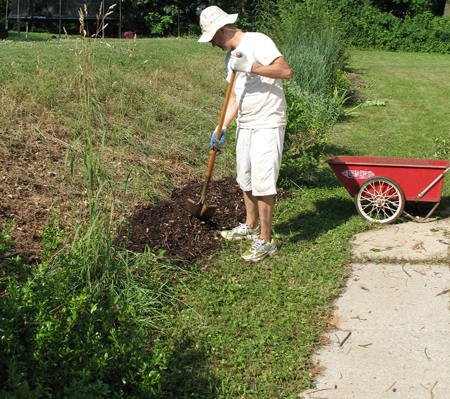
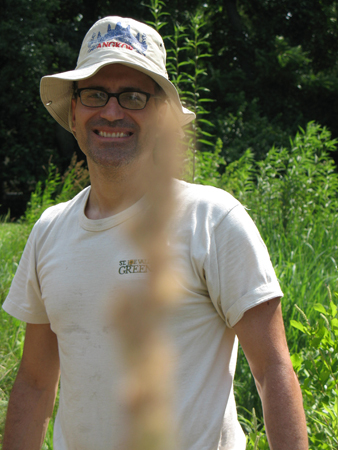
Thanks Ali! He’s wearing a hat from Angkor, Cambodia and an old St. Joe Valley Greens T-shirt whose logo I designed. After a few harrowing detours around downed trees and missed trains, he’s finally back in the city safe and sound.
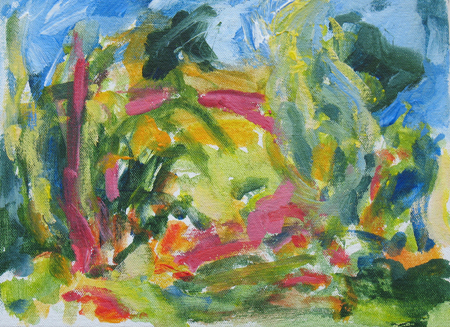
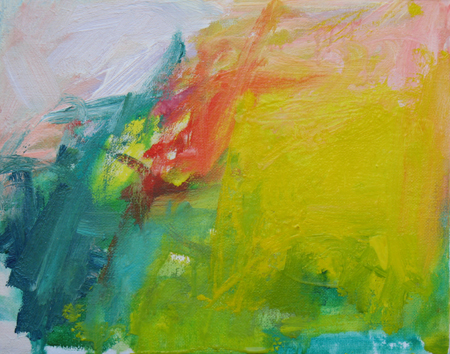
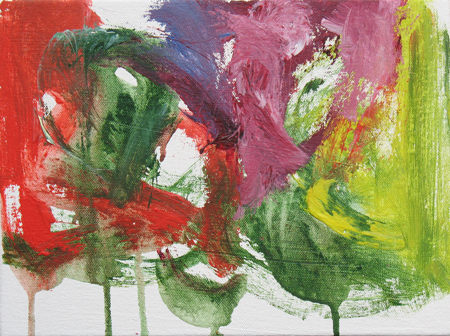
June Gardens. Acrylic on canvas panel, 9″ x 12″ 2010.
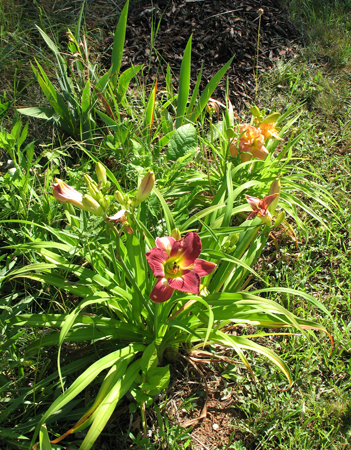
The painting was inspired by the riot of color in my gardens. Daylilies, roses, peonies and a wonderful dusky green mullein (verbascum) plant just beginning to bloom.
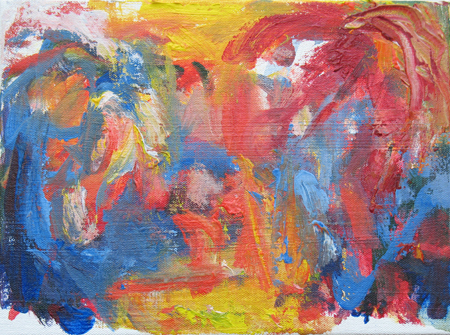
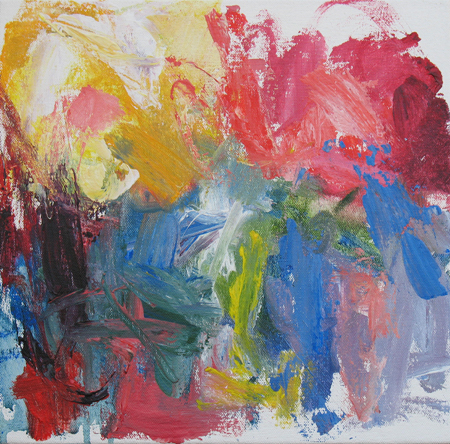
Tropic of Capricorn. Acrylic on canvas panel, 9″ x 12″ 2010.
This painting is both an homage to Henry Miller’s book of the same title, and to summer. The long, hot summer.
I haven’t been able to find many glowing reviews of this 1964 film and it seems to be misunderstood on almost every level. Most reviewers portray the director, Arthur Penn, as having failed at his task of creating a coherent narrative and Warren Beatty as being ‘energetic’ but miscast as the lead. As one of the few supportive mainstream critics, Judith Crist loved the film, calling it ‘a brilliant original screen work’. I felt the same way when I watched it earlier this evening on Crackle.

Penn offers a multi-layered work of art that incorporates new wave and experimental film techniques new at the time, such as layered clips and double exposures. He adds an iconic beckoning character who keeps popping up during Mickey’s darkest moments; a Japanese performance artist who uses a horse and wagon to drive his sculpture around the city. This is fairly transparent symbolism – the artist as grinning clown who seems to live only for his art – but the scenes still serve as a bridge to the lead character’s final revelation.
The plot lays bare neurosis and paranoia; the general state of the country coming out of the McCarthy era and the communist ‘menace’, and heading into the Viet Nam war. Penn admits in one interview that he wanted to capitalize on the original play’s exposé of the era’s ‘timidity’ and ‘sense of guilt and a sort of silence and evasion’. In another interview he denounces the fear of communism as nonsense, saying that the American people knew better. In other words, it was obvious propaganda from a government using scare tactics to control its populace. His Mickey was running ‘from allowing other people to have possession of you.’
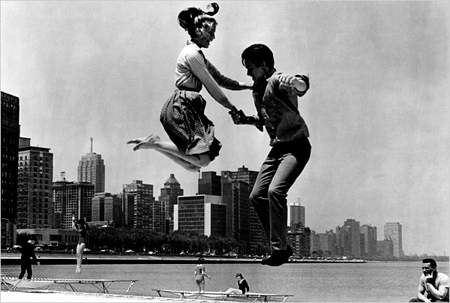
Everett Collection
The jazz score by Eddie Sauter and Stan Getz‘s sax improvisations plays to a voiceless fight scene in much the same way that Penn would use an excruciatingly slow shutter speed three years later for Bonnie and Clyde’s final denouement. The contrast of the beauty of music and motion to violence is what makes his films’ violence seem so completely detached from reality. In much the same way that audiences detach and become numb when they watch any violence at all.
Penn must have been impressed by the surrealism and wide shots of Antonioni’s Red Desert from a year earlier. His close-ups of cars being crushed (often with bodies still inside) and girders framing Beatty are reminiscent of that film’s wide angles of a nuclear power plant and the existential bleakness of its own industrial landscape. Robert Bresson’s cinematographer, Ghislain Cloquet, was hired to shoot Mickey One in black and white, because as Penn said, it was essentially ‘a colorless’ film.

Panned by Bosley Crowther in a 1965 NY Times review, the film should have garnered more acclaim, not least for Penn’s resistance to a Hollywood pat theme of good triumphing over evil. What we’re given is compromise, that ubiquitous and not very dramatic solution to a human dilemma. The mob has either given up chasing Mickey or they’re willing to let him go through life as a mediocre talent. Apparently he’s no longer important enough to be wiped out. And Beatty’s character has given up running. He chooses to live one last evening (a small courage) on stage rather than to keep living in fear. His last words on screen are ‘or is that the word?’
From June 7 through July several of my paintings will be shown in the Hudson Valley Gallery in the Williamsburg neighborhood of Brooklyn, NY. This is a ‘window’ gallery, one of the many alternative spaces for exhibiting work that have cropped up in the city. The circa 1920 building has been owned since the 1980’s by Larry Silver, a gallerist who lives upstate outside Woodstock. A few years ago, Silver decided to turn his love of art into support for emerging artists and he began showing select works in the large window of the building’s bottom floor.
Hudson Valley Gallery, 132 Broadway at Bedford Avenue, Brooklyn, NY 11211. Information: 845.687.6146
Video by NY arts blogger Loren Munk.
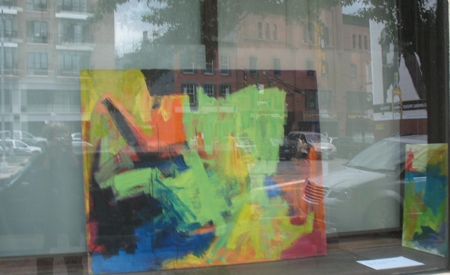
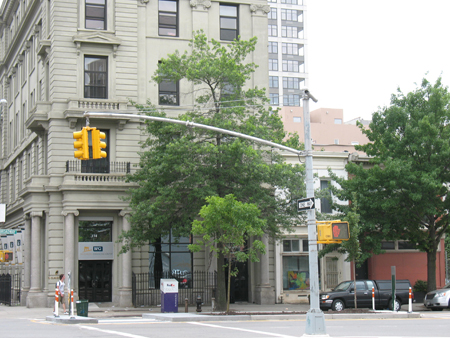
Works shown:
Green Tomatoes. Oil on canvas, 50″x40″ 2003
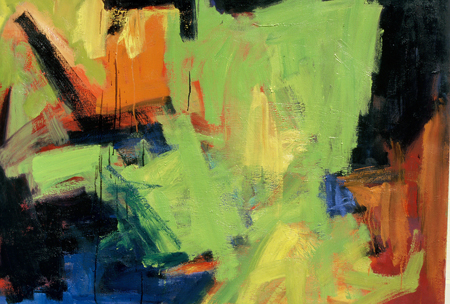
Tiber Bridge. Oil on canvas, 24″x20″ 2007.
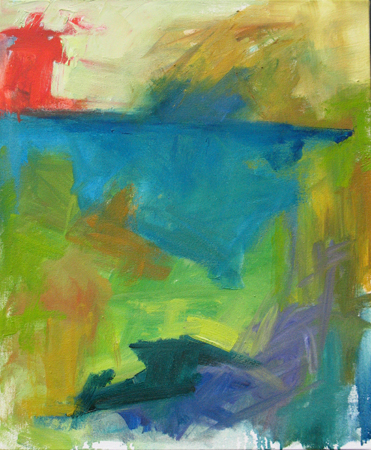
Pines. Oil on canvas panel, 18″x14″ 2008.
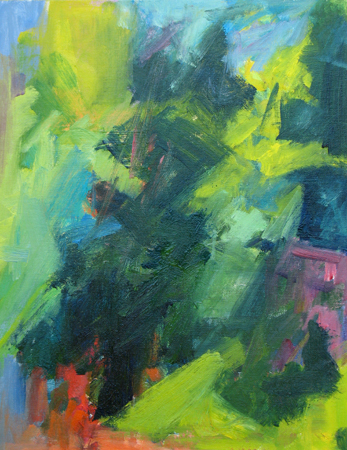
Spring. Oil on canvas panel 8″x10″ 2008.
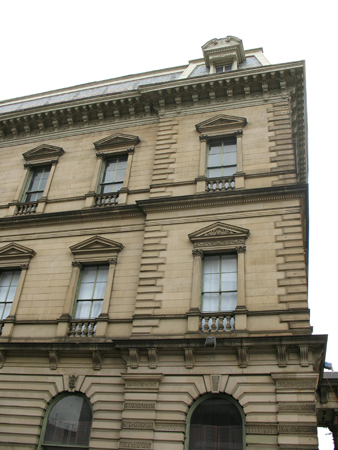
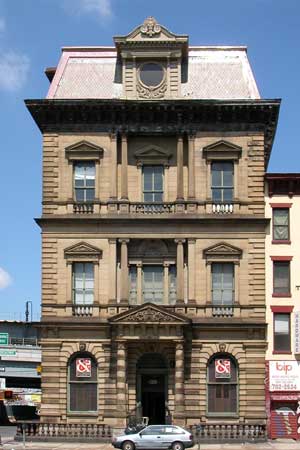
The gallery is across the street from the renowned Williamsburg Art & Historical Center (WAH), a multicultural art center in the epicenter of the neighborhood’s artists’ community. Larry introduced me to the center’s founder, Yuko Nii, who just happened to be in the historic 1876 Landmark building, setting up an exhibit. Hers is an astounding story of dedication to the arts. She bought the building in the mid 90’s and established the foundation soon afterwards.
Currently on view; the Brooklyn College MFA Thesis show.
An excerpt from the center’s history;
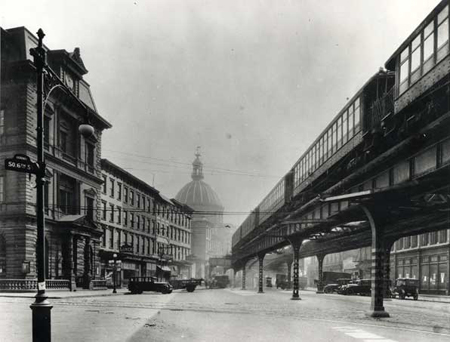
In the late 1980s a trickle of artists began to flow into Williamsburg Brooklyn on the north side around Bedford Avenue because of cheap rents and the convenience of the subway to Manhattan just one stop away by L train. Artists began to open their studios as small pocket sized galleries and this began to attract weekend visitors, a few collectors, and even some museum and gallery folk from Manhattan. Little by little the small art colony grew. Meanwhile, the south side remained an underdeveloped area and was considered to be a “dangerous†place. Then in late 1996 the artist Yuko Nii bought the Kings County Savings Bank Building on the south side at the foot of the Williamsburg Bridge on Broadway at the corner of Bedford Avenue, and founded the not-for-profit Williamsburg Art & Historical Center (WAH Center), based upon her Bridge Concept. That concept envisions a multifaceted, multicultural art center whose mission is to coalesce the diverse artistic communities, and create a bridge between local, national and international artists, emerging as well as established artists of all disciplines. Thus through the international language of art we come to understand each other to create a more peaceful and integrated world. The WAH Center is truly a force for peace and understanding and it’s concept is incorporated in its acronym: “WAH†in Japanese means “peace†or “harmony†or “unity.†Nii also wanted to preserve the WAH Center’s building, a French Second Empire masterpiece, which is on the National Register of Historic Places and a New York City Landmark, and make it a functional part of the cultural community of Williamsburg, Brooklyn, NY.
A couple of new paintings inspired by all the songbirds who love my backyard. The returning cardinal was flashing his red in my apple tree this afternoon.
Birdsong. Acrylic on canvas panel, 16″x20″ 2010.
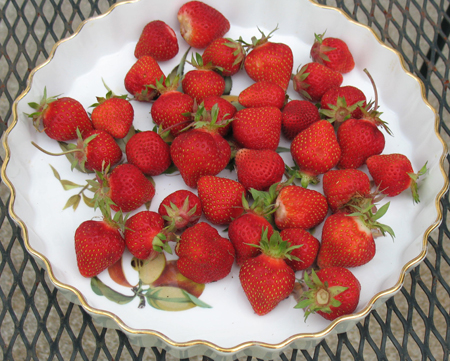
Strawberries keep coming despite the weediness of the beds. Like Ruth Stout, I have no intention of wasting time weeding while they keep producing like crazy. I already have enough to fill a shelf in the fridge.
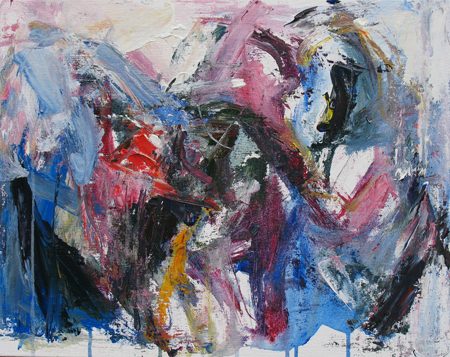
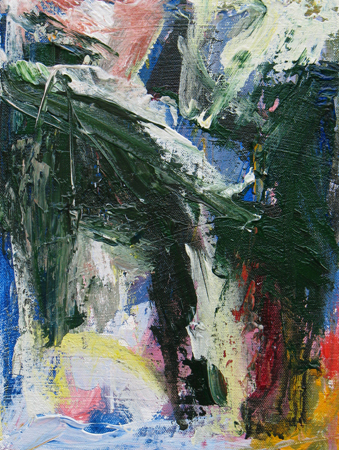
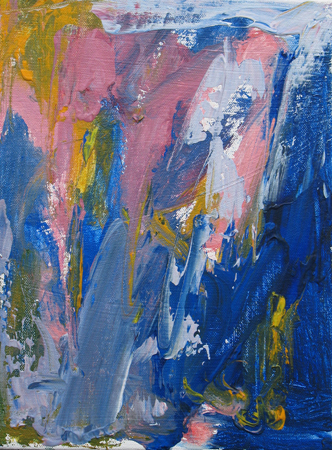
this one is called Waterfall. Acrylic on canvas panel, 12″x9″ 2010.
…this is just the beginning. I’ve read that it’s impossible to eat too many strawberries.
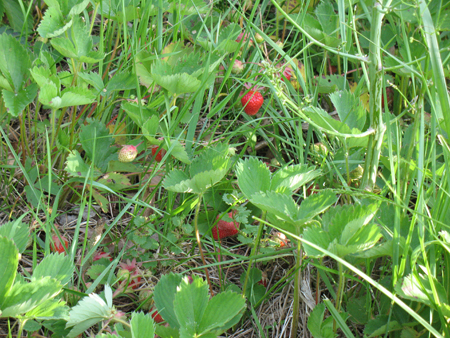
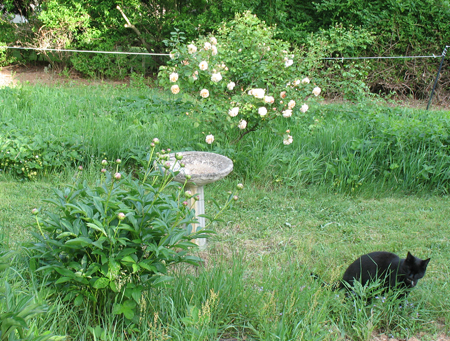
these are the late strawberries and luckily the two beds are staggered, or I’d be out there picking non-stop.
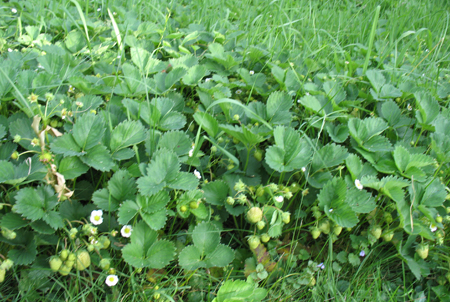
the white peony always blooms first. Ants love it.
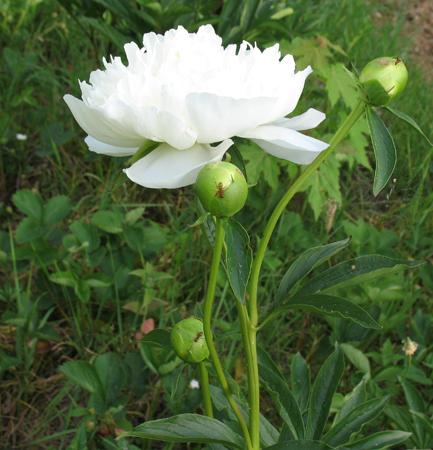
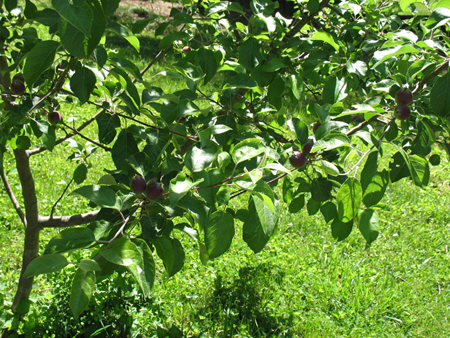
The strawberries are coming in fast and luscious. I’m picking them twice daily to keep up and eating just as many. I sprayed a fungicide on the two apple trees for the first time and hope that helps with the scab and cedar rust. I’ve been reading Michael Phillips’ book on organic orchard development, but there is a lot I still don’t know about how to manage even a tiny orchard of  two trees.
Lettuces and radicchio wintered over from the late summer plantings and the purple asparagus is still shoving its stalks up on these mid May rainy, cool mornings.Â
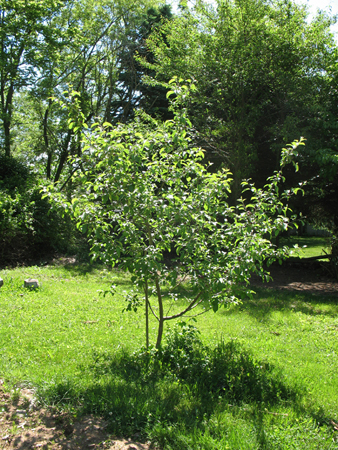
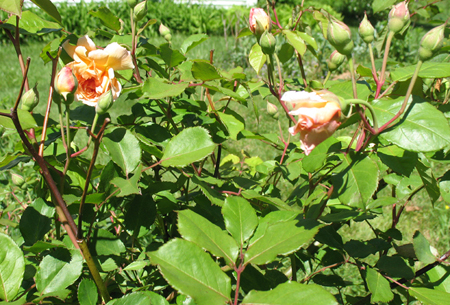
The musk roses are free of black spot and aphids.Â
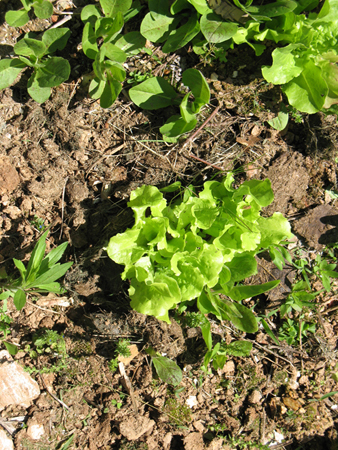
Beautiful oakleafed lettuces and radicchio from Umbria, 2007.
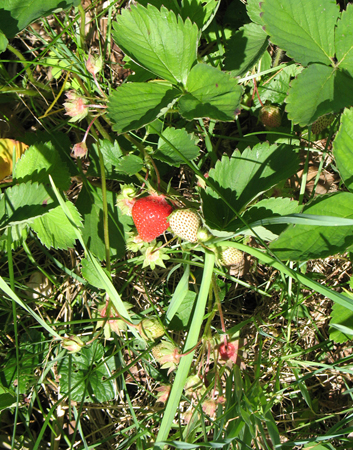
…just the beginning of the deluge.

These are the acrylic works that I finalized last week. Back to experiment with more ideas this week.
an homage to the neighbor’s cat Buddy, Â as he basked in the gardens.
Black Cat Gardens. Acrylic on canvas panel, 16″x20″, 2010
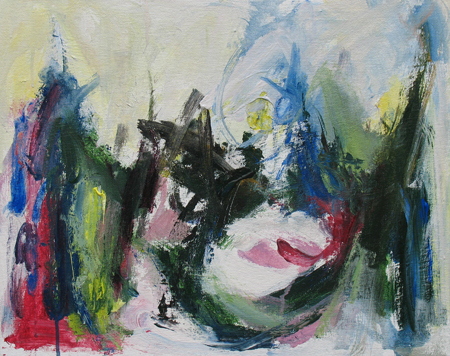
Sometime in Spring. Acrylic on canvas panel, 13″x12″, 2010.
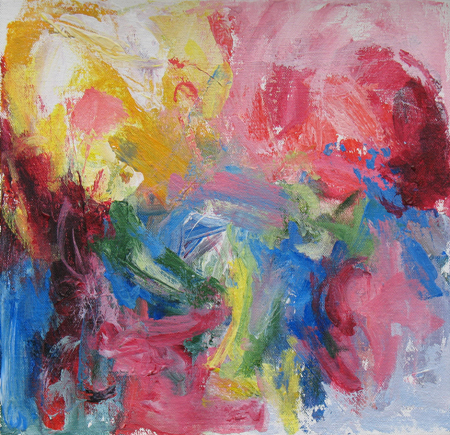
Azaleas. Acrylic on canvas panel 9″x12″ 2010.
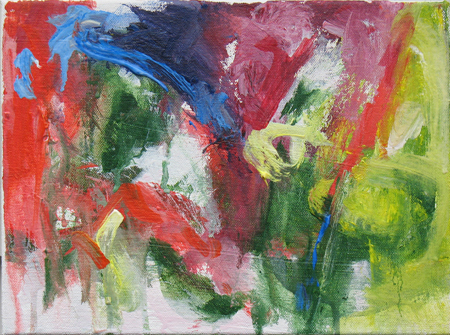
I’ve been eating asparagus out of my garden for the month of April – delectable sauteéd with garlic in risottos or with pasta in my homegrown tomato sauce. A real spring treat. And now the strawberries are coming on, my last frozen stash lasted through March. The collards and radicchio over wintered under the heavy snows of last winter, and I have baby lettuces that finally germinated from my late July planting.
The blueberry bushes and the two apple trees are covered with tiny fruits. The Dutchess apple didn’t produce at all last year, so I’m pleased that she’s come back. I’m not sure much can kill the Liberty, it is an incredibly hardy tree. I’m going to spray for the first time with a fungicide, since the cedar rust and scab has been so bad for the 4 years of their young lives… I’m hoping it will help with the trees’ overall health. Eating ugly apples takes some getting used to, but the fruit is still tastier than what you can buy in the store.Â
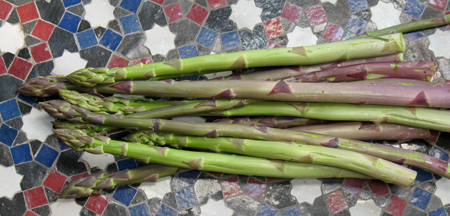
I tried a few acrylic paintings last week and the drying time is impressive compared to oils. As in an hour instead of up to twenty years. But there are drawbacks. Luminosity is one. These are in progress, just one session at this point.
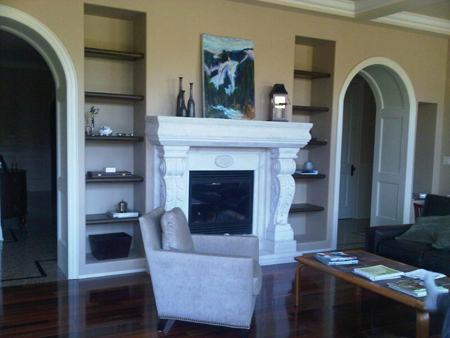
It’s rare that I see where my work ends up, but my most recent patron was kind enough to send me a photo from her Blackberry. Her living space is perfect for the painting and I’m happy to say that she’s pleased as well.
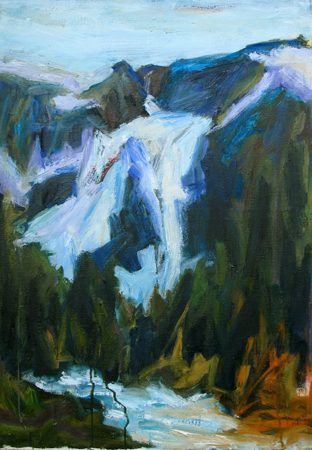
The piece was created from a trip to a remote cabin in the Tantalus mountain range of British Columbia, was exhibited at the Wayne Arts Center in 2007 and coincidentally curated by Mark Van Proyen, who taught a painting class I took at UC Berkeley, when I lived in San Francisco. Mark has written for Art in America, Artweek and other publications. Victoria Donohoe, arts critic for the Philadelphia Inquirer, cited my work in her review of the show.
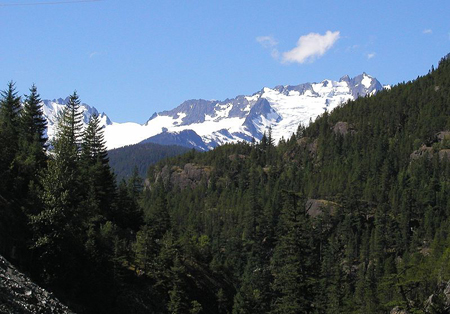
Rubble Creek appears from springs that flow out of the Sphinx Glacier. I stood in Garibaldi Park on a cold, misty morning in May of 2006 and sketched the scene, then finished the painting in my studio here in the Brandywine Valley of Pennsylvania. I love painting the rugged terrain of British Columbia, whether mountains or islands off Vancouver Island.
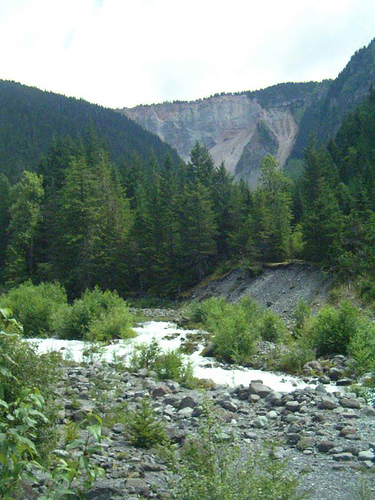
When I was there just four years ago, the Sphinx glacier was very much in evidence from a short hike into the park. I wonder if it has melted, like so many of the northern glaciers. It is a gloriously beautiful spot.
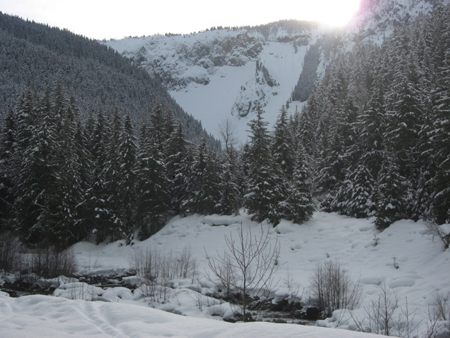
This was my view from the front deck of my cabin. The Tantalus range is spectacular in all weather.
An interesting coincidence; one of my moving estimates turned up the French artist, Françoise Gilot. Who also happened to be married to Picasso and whose book that has sold over a million copies, “Life with Picasso”, I read in 1989.
The estimator from Arpin moving company commented that I ranked up there with 3 other artists for having the most paintings in one household…and then went on to tell me that he had met Gilot recently, moving some of her Picasso catalogs to a college library. Small world.
In the interview with Charlie Rose below, Gilot says the most important thing that she learned from Picasso was his sense of concentration and the fact that he thought of nothing else but his art. She also seems to hold the secret to a dynamic relationship and that may be from her own sense of self as a purposeful and strong artist.
She demanded of Salk when he proposed, “I can’t live with anyone more than six months out of the year.” Thus began a 25 year marriage.
This is a delightful interview that Charlie Rose conducted with Gilot in 1998. I am especially fond of her naming her own paintings and thousands of prints, when asked by Rose of what she is most proud.
“An artist is one who IS and who DOES.” Enjoy.
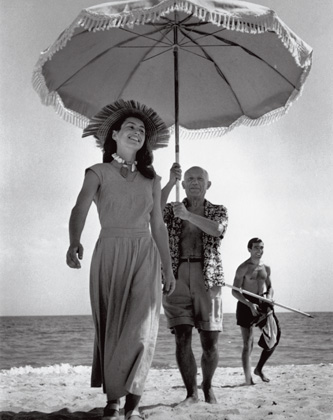
Robert Capa/International Center of Photography Collection
Robert Doisneau
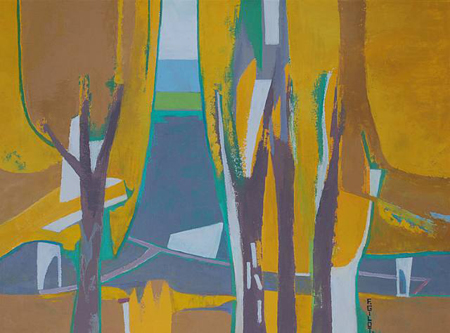
Ginko Trees, Oil on canvas 2006. РFran̤oise Gilot
