Interview with Jessica Torrant

This is an interview with abstract painter Jessica Torrant, a fellow member of the new Artisans Gallery Team, that was formed on Etsy to highlight a curated team of gifted artisans and fine artists. Jessica lives in Connecticut and has exhibited in the US and the UK. I noticed her colorful and unique work when I first joined Etsy and have featured it in my own treasuries, or curated collections on the site.

VW I know that you’re a painter and that you’ve had a successful online shop for a few years. Can you fill us in on your background as an artist and tell us a little about yourself?

JT First let me say, hello Victoria, hello AGTeam and blog visitors! It’s an honor to be participating in this interview with you and I’m a huge fan of your work.

I grew up an only child on a dirt road with fields and woods as my playground. I’ve always been drawn to the arts, from dance and theater to singing and of course, drawing and painting. I was very fortunate to have a creative family that supported my calling. My earliest influence was my grandmother who took up painting later in life and was a very talented, albeit humble, painter. I have memories of painting with her and watching her work on still life, bird studies and paintings of barns on the farm. She passed away when I was ten, but I still feel her supporting me. She once said, “She has a very confident hand,” to my mother as I was painting a little flower. I still remember the flower, I remember her voice saying the words and the smile that crossed my face while I pretended not to be listening. I remember the feeling of pride that swelled within me. I wanted to be a painter just like grandma. 

Flash forward to my college years when I studied painting at the University of New Hampshire. It was a very traditional school and they taught me how to paint like the Old Masters. After a couple of years working from figures and still life, I went to California for a semester exchange at UCSC. I was introduced to abstract contemporary art, wandering around in awe at SFMOMA – it was life long love at first site. I returned to UNH to finish my degree in 1999 and since then I’ve focused almost entirely on abstract art. I leave a little room for the occasional landscape or work from life. I like to touch base with those skills every so often to keep me grounded.   

VW  It appears that most of your work is vividly colorful abstracts, some derived from the landscape, but you also have a highly geometric focus. What is the context of your work, do you have any set ideologies as a painter? (formalist, expressionist, etc)

JT I work in several voices, all of which are my own and consistent within themselves. One voice leans towards expressionist (and in my mind and dreams, this has the largest pull for me) but there is also another part of me that needs to express some form of control which leads to more detailed, organized, abstract maze-like paintings. So there is action painting and then what I’d call puzzle paintings, because painting them is very similar to the state of mind and process of putting a puzzle together.

Then there are the paintings, like my Horizon series, that are very simplified abstract landscapes/color fields. These are a meditation for me to paint and to view. I don’t like to limit myself to what I’ll paint next, though I do seem to keep rotating between these three states of mind: 

fun/intuitive/loose/freedom/energy/gesture
controlled/slow and steady/focused/organized/detailed/networking
meditative/peaceful/space/connected/quiet/pure/color/texture


VW Who are some of your influences, whether they’re painters, sculptors, musicians, poets or ‘none of the above’? 

JT As I mentioned, my grandmother Irma was my first and foremost influence. I love Picasso. I may have hated the man if I had known him personally, but he blew my mind the first time I saw ‘Guernica’ in a fourth grade art club. (I was a lucky kid to grow up in the 80’s when there was actually funding for art programs in public schools). Since then, I’ve always been drawn to, and powerfully moved, by his work. My mother and I went to Paris in 2001 and we visited The Musée Picasso where I got to sit and sketch from his work for about an hour or so (thanks Mom!). It was one of the most amazing experiences of my life.

I love the Abstract Expressionists including; Frankenthaler, Rothko, Krasner, Pollock, de Kooning – oh I could go on and on!  Some contemporary painters that I admire include team members Mary Ann Wakeley and Kendra Zvonik and you, Victoria. I also love Elis Cooke, Martha Marshall, Meghan Henley, Jean Hutter and Aisyah Ang – all of whom are also on Etsy. Truly I could go all day listing names, this is just a sampling. 

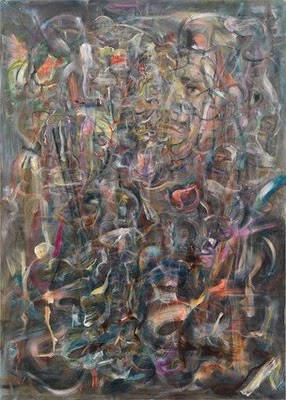
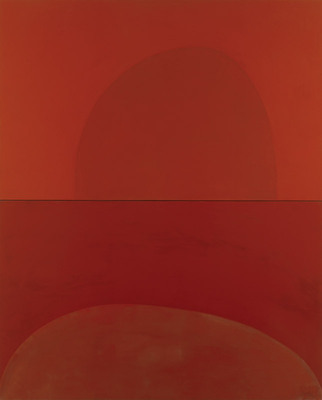
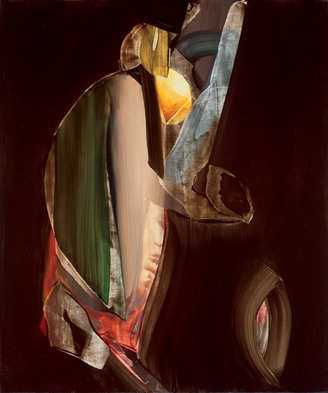
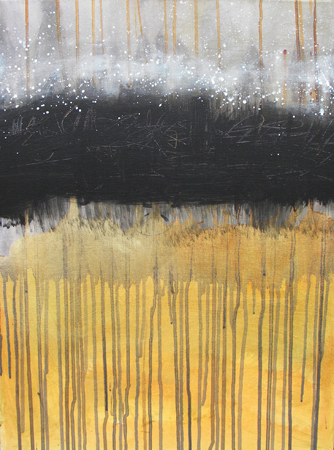
Dreamstate 2. Acrylic on canvas, 24″x18″
VW Do you work spontaneously or is there a set time that you devote to the paintings on a daily/weekly basis?

JT I have mixed luck planning to paint. Most of the time it happens spontaneously and once I begin, it dominates my life and takes over for a four to five day long ongoing session. Then I come up for air, reconnect with the world and wait for the next cycle to begin. 

VW How do you stay current, or is that important to you. Do you visit galleries and museums on a regular basis, or travel to view art and cultural events?

JT Because I’m in such a rural area and I tend to be a bit of a hermit or homebody, the internet is my primary portal into the world of current art. It’s also the season. Once spring comes, I’m more apt to hop on a train to NYC or drive up to Boston for a day in the city, appreciating art and culture. The end of winter is rather gloomy here in New England – we’re all itching for spring!

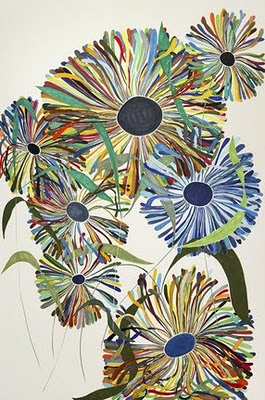
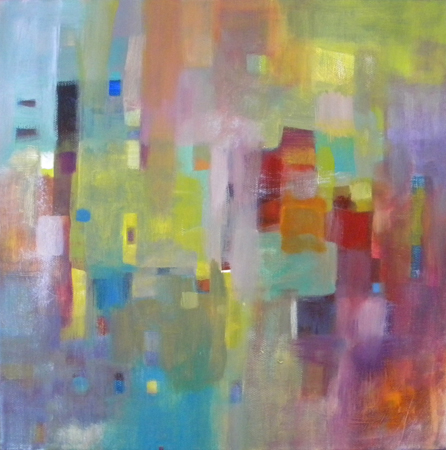
Promise Land. Acrylic on canvas, 12″x12″
VW Some artists suggest that the studio is too private for them, that they require a social forum for their work. Does networking with other artists and developing community have much bearing on your life as an artist and if so, how does it inform your work and process? 

JT I need to work in a private space. I had a studio for a while in a mill building with about 40 other artists and I could never relax, even behind closed doors with no one watching. It  confirmed that I can’t just say “this is the artist’s dream – get with the program, you’ll love it!”. I truly need to be alone when I paint.

It took years for me to even allow my husband in the same space. Now I have a studio in our backyard that I use during the warmer months (another reason I’m ready for spring – I can’t wait to get out of our basement!). I love working from home with my dog, and taking a break to do some weeding in the garden. It’s wonderful. Still, there is a down side and that is community. It’s a solitary life and as an only child, this comes naturally to me. However,  I need the balance of alone time along with social interactions. The relationships, and indeed close friendships, that I’ve made with other creative people online act as daily communication and touch stones. Without those connections, this experience would be totally isolating. I am extremely grateful for those relationships.  

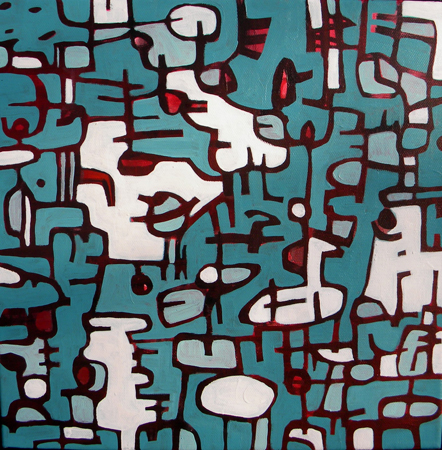
Puzzled. Acrylic on canvas 12″x12″

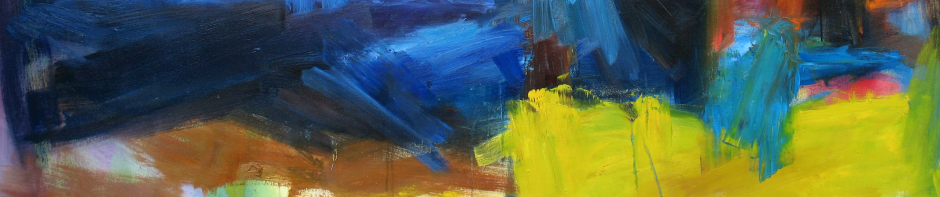
The Process in Blue. Acrylic on canvas, 24″x18″

VW Exhibiting in galleries and museums – are you involved in showing your work in brick and mortar galleries?

JT I have exhibited in the past and would like to focus more attention on gallery exposure in the future. The last year or so I’ve slowed down with shows and focused more on my online business, but I feel like that isn’t enough for me anymore. I need to get more work out there in the flesh. 

VW Can you talk about how you began selling your work online and what challenges you faced?

JT I began selling my work on eBay in 2004 while working for a frame shop. It started as a “why not?” because I wasn’t doing anything else with the artwork that I kept churning out in private. To my delight, it took off and I quit my job in 2005 to go for it full time. At the time, there was a market for what I was making at the prices that I was asking and everything just fit into place. It was a golden era for me to enter into, when selling art online was still a bit of a novelty niche, but buyers were catching on. Some buyers realized they were getting a deal and it wouldn’t last so they bought a lot. One would think that would be the best thing for me, but actually it spoiled me with a false impression of what was to come.

Things started to slow down, the market began getting flooded with new artists every day, the demand went down and the supply went up and the eBay fees kept rising. That’s when I moved to Etsy and things turned around for me. So that was the first and biggest lesson for me to learn about selling art. It’s a roller-coaster; never get too comfortable because things will always change. The good thing is, that lesson goes both ways. It always works out that just when you’re feeling like you’ll never sell another painting again, all of a sudden the tides turn and things go your way.  


VW Any long term goals for your painting or art?

JT I’d like to remain flexible and open to new ideas and techniques and keep challenging myself. I’d like to keep pushing the scale working on larger and more ambitious paintings. I’d like to return to the figure just to see what my take is on it now after working abstractly for the last ten years. I’d like to create a large scale series for a gallery exhibit and make that a reality. The most basic goal that I have, is to just keep painting for as long as I am able.

VW Anything else you’d like to add?

JT It’s been a pleasure. Thank you Victoria and thank you to the Artisans Gallery Team!

VW Thank you, Jessica! 

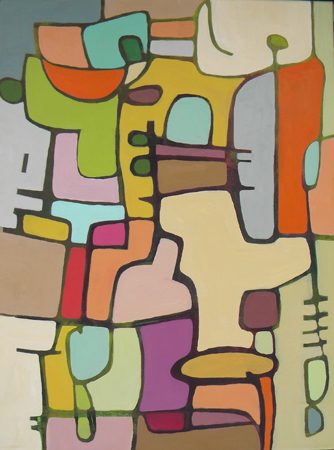
Wishful Thinking. Acrylic on canvas, 24″x18″
Website – http://www.jessicatorrant.com

Posted in Daily meanderings, Interviews | Tagged , , , , , , , , , | 3 Comments

Ali Hossaini and Ouroboros, a history of the universe

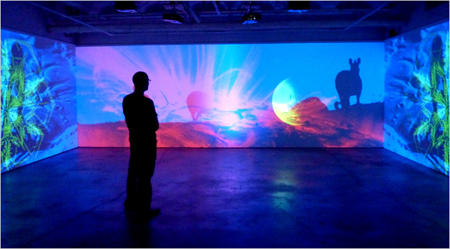
Ali Hossaini teams up with video artists and programmers, Blake Shaw and Bruno Levy from Sweatshoppe, for their 3-D extravaganza “Ouroboros, the History of the Universe”, now showing at the Ise Cultural Foundation in Soho. I’ve known Ali since our days together at the Site and ZDTV in San Francisco where I art directed motion design and he produced topical content at the interactive dotcom start-up. At the time Raves were popular, whose visuals were reminiscent of 1960s music events that partnered with light shows of psychedelic imagery .
The ambitious exhibit, curated by Koan Jeff Baysa, depicts a visual universe through 30,000 layered and appropriated images from the internet. The software that Hossaini, Levy and Shaw developed to create the layering is experimental, which gives this show its unique look. They note that they are not trying to approximate slick and commercial Hollywood versions.
Rather, the concept is the exhibit’s strength; imagery of the sacred mixed with the mundane, the importance of nature and man’s inner sense of self that in contrast, transcends a relatively short technological and mechanized history.

The Sweatshoppe collective of Levy and Shaw developed the aesthetic of Ouroboros, which is based on television’s primary colors of red, green and blue as opposed to fine art’s of red, yellow and blue. By writing their own software, the pair have developed ways to transform ordinary images into Chromadepth, which produces a stereoscopic effect; layers appear to recede and advance, depending on diffraction of color. While the collective often does live video wall performances, for Ouroboros the technique was applied on a large scale to create an immersive hologram.
For a taste of the show, watch this clip and be sure to check out Saturday’s New York Times review by Dennis Overbye.

Ouroboros: The History of the Universe from SWEATSHOPPE on Vimeo.

For more information on Hossaini and an artist’s statement, visit his site.

“Ouroboros: The History of the Universe” continues through April 23 at the Ise Cultural Foundation, 555 Broadway, at Prince Street, SoHo; (212) 925-1649, iseny.org.

Posted in Daily meanderings, Interviews | Tagged , , , , , , , , , , | 1 Comment

March and new paintings

The weather has finally turned. Today I sat in the sun studying, and later this week it might even be warm enough to paint on the sun porch. A few new works that I’m late in posting.

March. Oil/canvas 24″x31″ 2010.

Moderato. Oil/canvas panel 9″x12″ 2010.

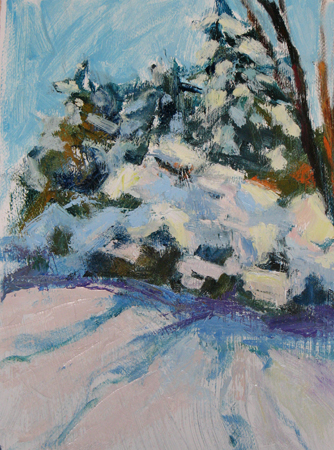
Forsythia Border in Snow. Oil/canvas panel 11″x14″, 2010.

Winter Trees. Oil/canvas panel 9″x12″, 2010.

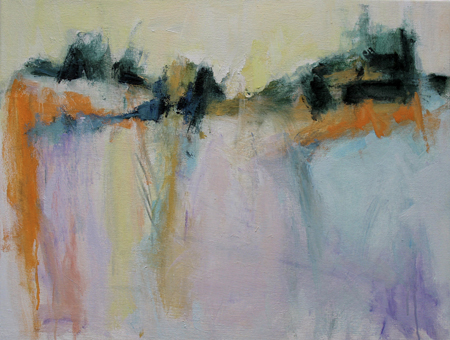
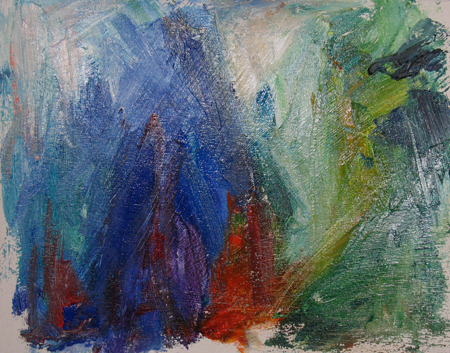
Peaks. Oil/paper 12″x15″, 2010.

Posted in Daily meanderings, New Work | Tagged , , , , , , , , , , , , | Leave a comment

Frank Lloyd Wright in my neighborhood

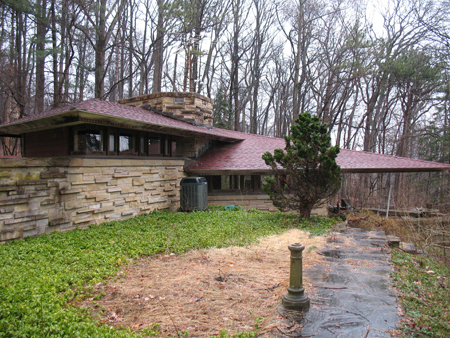
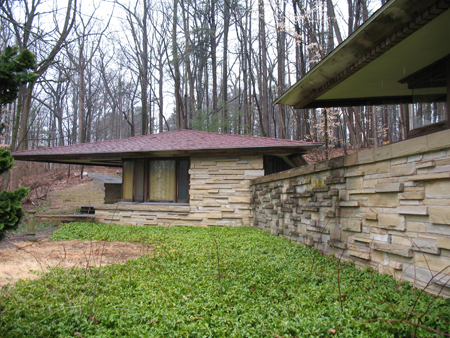
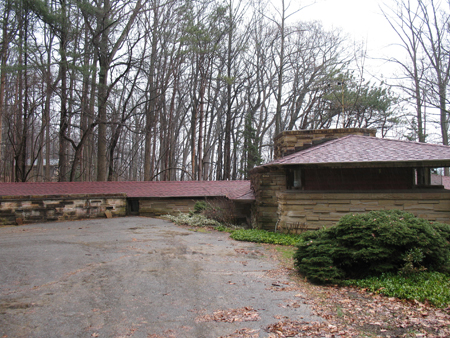
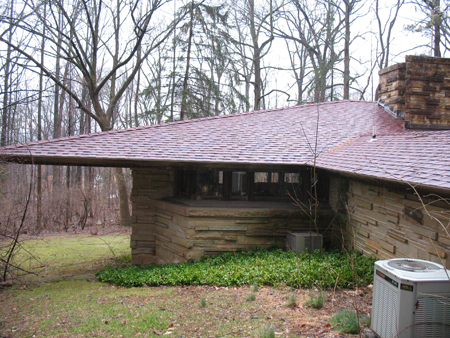
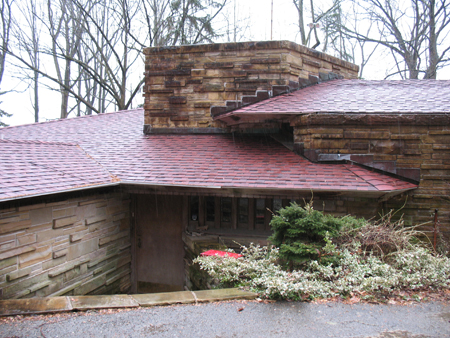
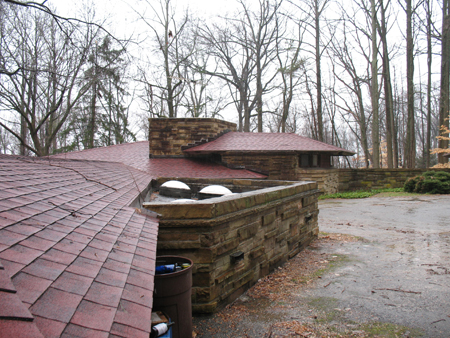
I’m a volunteer for my township’s historical commission and we  rediscovered one of Frank Lloyd Wright’s residential homes in the area, the owner having recently passed away. Folly Cottage was designed in the 1920’s for Wright’s daughter, who was tragically killed in a motorcycle accident before he could build it for her as intended, in Arizona. Wright prohibited his plans from being executed by anyone other than himself, but these were adapted for use by his protegé, the architect John Howe. The name of the cottage, ‘Folly’, resulted from the 3 years it took to complete and the final unanticipated expenses.

The site is actually two buildings begun in 1960 – a three room retreat and a tiny guesthouse. Howe and Wright’s son-in-law, William Wesley Peters, of Taliesin Associated Architects, executed the original plans, adding the guest house  in 1974, an art gallery. 

The building is significant for being meticulously engineered and having just one right angle. The entire design is based on triangles and the house clings to a steep slope. In fact, the main entrance is reached from below ground level. 

I took photos today and was amazed at how well both structures have endured southeastern Pennsylvania weather. The roofs are like new, and there is little wear on the hand cut Tennessee Fieldstone walls. It is a spectacular tribute to Wright’s genius and defies the usual critique that his buildings lack solid engineering skills.

This is from the link below on architect John Howe:

John Howe (1913-1997) joined the Taliesin Fellowship of Frank Lloyd Wright, in Spring Green, Wisconsin, in 1932, becoming a charter member of the Fellowship and apprentice to Mr. Wright. Howe has often been called “the pencil in Mr. Wright’s hand” for his lovely work on hundreds of architectural renderings. Howe remained at Taliesin until 1964 as one of the Taliesin Associated Architects, during which time he designed more than thirty structures throughout the United States. Howe moved to Minnesota in 1967 and opened an office which he maintained until his retirement in 1992. After retirement John Howe and his wife Lu Sparks Howe moved to California. He died in Novato, California on September 21, 1997. His collection consists of architectural materials and includes working drawings, renderings, prints, photographs, job files, contracts, correspondence and specifications for over 300 commissions, built and unbuilt.

Posted in Daily meanderings | Tagged , , , , , , , , , | 21 Comments

The Whitney Biennial reviews

I haven’t gotten into the city yet to see the Whitney Biennial and may have to skip it this time. Much time being spent painting my own work and getting house repairs finalized.

What I have seen are interesting takes on the art involved, so I’ll include a few excerpts here. I think my favorite is Sharon Butler’s review from her Two Coats of Paint blog, and you can read her full post there. She includes quite a few paintings and gives us a representative overview of the show. I haven’t included all 18 paintings, you’ll need to visit her blog to see them:

In their opening remarks on Tuesday, the 2010 Whitney Biennial curators Francesco Bonami and Gary Carrion-Murayari confessed that they approached the selection process (gasp) open-mindedly, without a preconceived theme. Fortunately, the exhibition itself faithfully reflects their intent, presenting a resonant sampling of contemporary art practice. That is not to say that the show selection is thematically unfocused or ungrounded. To the contrary, much of the work manifests a rediscovered attention to physicality in various ways: in its preoccupation with human vulnerability, in its juxtaposition of figuration and geometry, or simply in its palpable materiality. 

Unlike the last Biennial, which offered very few canvases, 2010 features paintings around every corner. In line with the broader theme of physicality, the inclusion of so much painting signals the importance of sustained physical engagement and a renewed interest in the lifespan of the art object. Here are images from the eighteen painters (and artists who use related media) included in 2010–an impressive, thoughtfully curated exhibition.

Note: Excerpts about each artist are pulled from the Whitney’s press materials and link to the full text. 

“Scott Short considers the concepts of authorship and reproduction. He begins by photocopying a blank piece of colored construction paper onto a blank piece of standard copy paper—a method that results in seemingly random black-and-white patterns printed on the copy paper. He then copies that copy, repeating the process multiple times and continuing the random patterning process. Once the artist selects a final permutation, the abstract image is then photographed, formatted as a slide, and projected onto a primed canvas. In the final stage, Short painstakingly recreates this image, taking care to remain true to the particular patterns and shapes generated by the machine.”

Charles Ray presents a room filled with flower paintings on paper.


“Jim Lutes integrates representation and abstraction through his use of images and lyrical marks in the same pictorial space.”


“Suzan Frecon plans her images carefully, first deciding on the dimensions of the work and the paint colors to be used (often grinding her own pigments to achieve the desired effect). She then figures out the precise imagery in sketches, using geometric formulas as well as her own visual intuition to create related forms in which dissonant features are suspended in balance.”


“Maureen Gallace finds inspiration in the modest edifices and rural environs of her native New England. She paints intimate landscapes featuring serene, unpeopled houses. Deceptively effortless in their appearance, Gallace’s paintings take shape through careful observation and decisive omission.”


“Inspired by the seventeenth-century Spanish still-life tradition, Lesley Vance carefully arranges and lights objects such as fruits or shells. The artist then photographs these arrangements, and the resulting images serve as the basis for her abstract paintings.”


Linda Yablonsky’s review in the New York Times, Women’s Fashion magazine offers a focus on women;

Hardly a Tweet had been sent after the Whitney Museum of American Art released the names of the 55 artists selected for its 75th biennial before it was already known as “the women’s biennial.” “That’s crazy,” says Francesco Bonami, the chief curator of the exhibition, now on view through the end of May. “To be the women’s biennial, 55 of the artists would have to be female.”

Nonetheless, more than half the artists represented are women, a record for the Whitney’s marquee exhibition. Bonami and Gary Carrion-Murayari, his associate curator, say the number was happenstance. They intend their survey, titled simply “2010,” only to reflect the tenor of American art right now, which they see as “somber and intimate.” Not feminine.

If anything, “2010” suggests that the art of the moment has achieved gender equality, even if the market for it has not. But inequality is not the issue here. Whereas the wisecracking feminist protest group the Guerrilla Girls once listed “working without the pressures of success” and “having the opportunity to choose between career and motherhood” among the perks for women artists, most of those in the biennial seem blasé about their place in the social order and entitled to the occasional appearance in a fashion spread, where the glamour quotient is highest.

That would have been anathema in the 1970s and ’80s, when a gale force of feminism roared through every corridor of our culture and women made their own bodies a medium for art. In fact, many women selected for “2010” are simply making art and don’t believe their status as women has anything to do with how far they get with it — or not.

They seem preoccupied with the basics: material, color and form. (An animated exchange between some of those present for the photograph seen here moved smoothly from studio practice to lipstick.) Few would make a work today like the one Barbara Kruger did in 1989, when she stated flat out, “Your body is a battleground.”


Holland Cotter in his Feb. 25th New York Times  article, suggests that the Biennal is referencing the economic downturn; 

Spectacle is out. Much of what’s in is quiet and hermetic to the point of initially looking blank. The prevailing aesthetic is the art of the tweak, minute variations on conventional forms and historical styles: abstract paintings stitched like quilts, performance pieces channeling the 1960s, and so on.

In the end it was video along with photography (there’s a wonderful, half-hidden Babette Mangolte installation) that made the show tick for me, particularly standout contributions by Sharon Hayes and Kerry Tribe.


And finally, Hrag’s Hyperallergic blog offers the people’s -or the bloggers’-speak on a Whitney press preview. Really nothing to do with the exhibit itself, but with Gallery 303’s policy on photography (none):

A group of unidentified New York art bloggers were spotted at the 2010 Whitney Biennial press preview staging an absurd protest of a painting that was lent to the show by New York’s 303 Gallery. The work, Maureen Gallace, “August” (2009), was the unfortunate recipient of the bloggers’ wrath but the protesters told me that their action was not directed towards Gallace but her gallery, 303, which continues to maintain a strict anti-photography policy that is despised by many art bloggers.

Located in Manhattan’s Chelsea district, 303 represents a long list of artist who are —  perhaps inadvertently —  contributing to the gallery’s anti-photo policy through their silence. The artists include Doug Aitken, Laylah Ali, Rodney Graham, Mary Heilmann, Florian Maier-Aichen and others.

One of the art bloggers was overheard murmuring the words, “looks better blurry,” while another said, “that will teach them,” though what the lesson was wasn’t clear.

During the seemingly spontaneous event, the group took really bad photos of the art work, sometimes with their cellphones, and told anyone who would listen about 303’s photo prohibition. 

The hooligan bloggers remain at large and assured me that they will continue to stage future actions against 303 until the gallery removes its ridiculous anti-photography policy….

“303 should know that we’re their worst nightmare,” one of them howled before disappearing into a crowd of reporters.


Posted in Art reviews, criticism and blogs, Daily meanderings | Tagged , , , , , , , , | 1 Comment

February and a new team

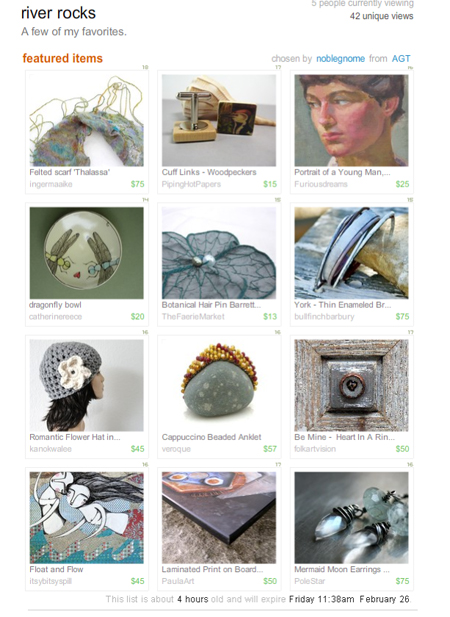
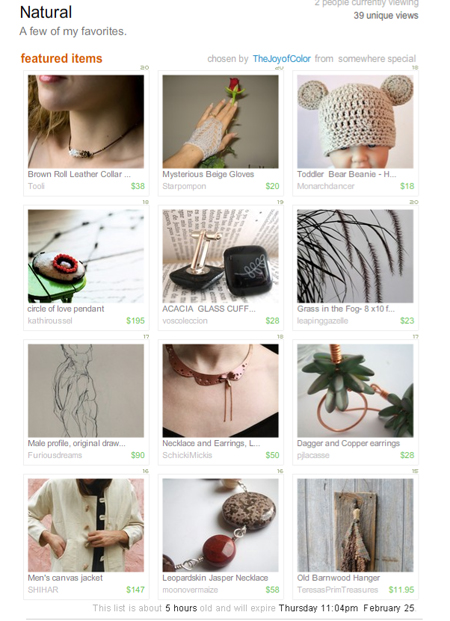
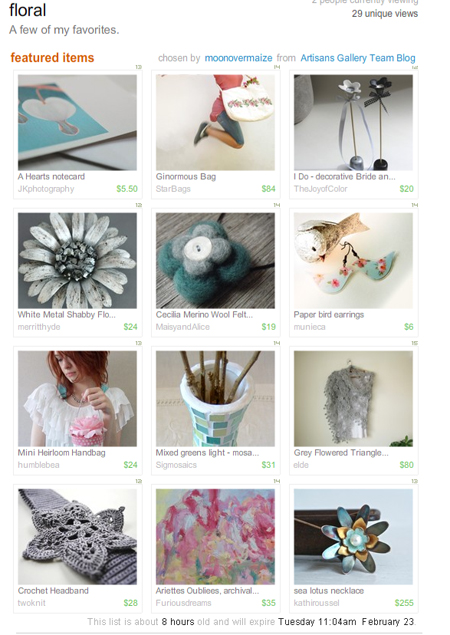
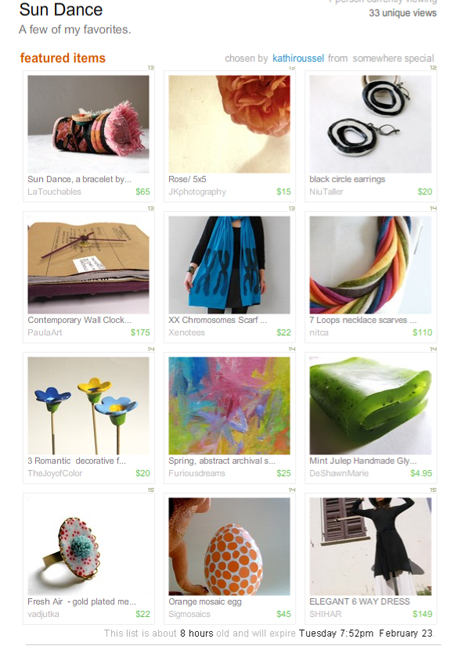
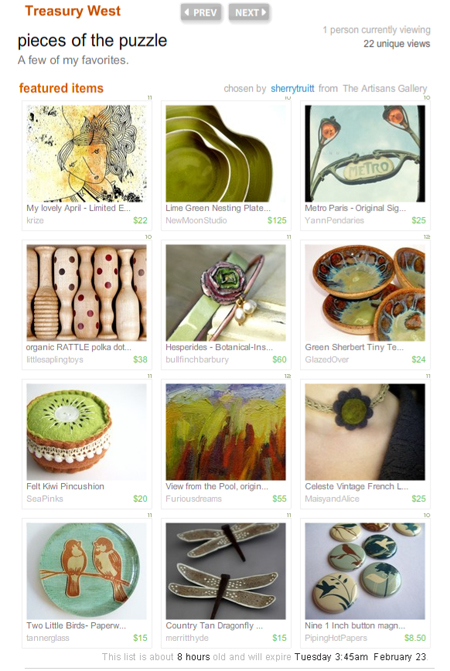
I was recently invited to join a new Etsy team called Artisans Gallery. The members have been busy curating ‘treasuries’, or collections of products. Some of my work has been featured in a few of these treasuries lately and I wanted to showcase some here.

I sold one of the paintings that was featured in one of these yesterday and the exposure is helping visibility for everyone. Etsy is a marketplace of thousands of artisans, this team has over 100 juried members.

There are so many talented craftspeople as well as visual artists on Etsy, and I’m also delighted to hear that the site was invited to participate in the Cooper Hewitt Design Triennial, Why Design Now?. They’ll have a kiosk in the interactive section where visitors can explore the site. I was a juror for the Cooper-Hewitt exhibit in 2007 and there is always fantastic work shown.

Curated by Nobelgnome.

Curated by TheJoyofColor.

Curated by MoonoverMaize.


Curated by KathiRoussel.


Curated by SherryTruitt.

Posted in Daily meanderings | Tagged , , , , , , , , , , , , | 2 Comments

Snow and roses

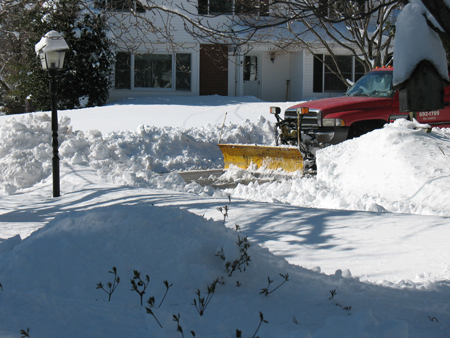
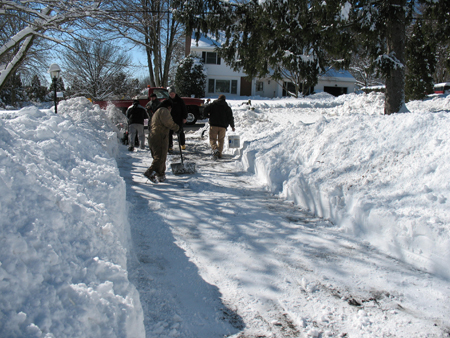
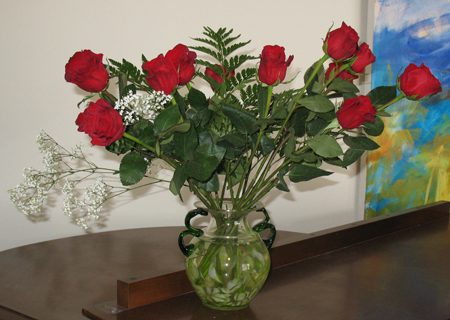
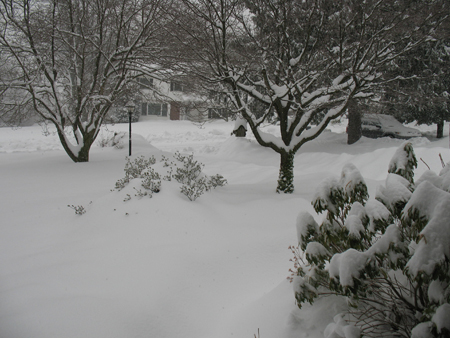
A little sun, a little less snow. The neighbor with his crew who plowed my driveway and some lovely red roses just in time for Valentine’s Day (thanks A).


Posted in Daily meanderings | Tagged , , , , | Leave a comment

A second blizzard, paintings in progress

This snow is wetter and heavier than any of our other storms, still coming down since last night. And I’d just gotten the driveway completely clear!

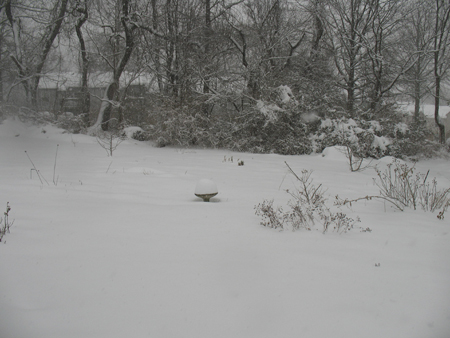
The birdbath is close to being obliterated from the view… 

Today it’s bread baking, soup making and thesis writing. Along with finishing up the newest snow paintings.

All oil on heavy gessoed watercolor paper.

Border in Heavy Snow. 20″ x 14″, 2010.

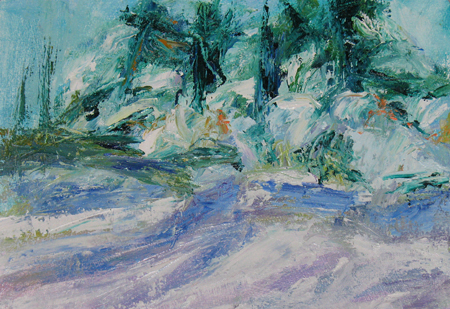
Shadows. 11 1/4″ x 15 1/2″, 2010.

 (Work in progress) Untitled. 11 1/2″ x 15″, 2010.

Posted in Daily meanderings, New Work | Tagged , , , , , , , , | 4 Comments

Milton Resnick, painting in action.

I discovered this tonight on public TV. Resnick is superb in his evaluation of what makes a painter tick.

‘The first five minutes are the best, after that you’re in trouble’.

‘Artists have ups and downs. If you’re good, you’re gonna go down. And some artists can’t take it. They begin to develop a technique to get out of that hole. Then they’re done. They never go any further.’

‘I don’t think it’s my painting anymore….after it’s finished.’

You can find Part 1 in youtube.

Posted in Daily meanderings | Tagged , , , , , , , | Leave a comment

Blue skies in February

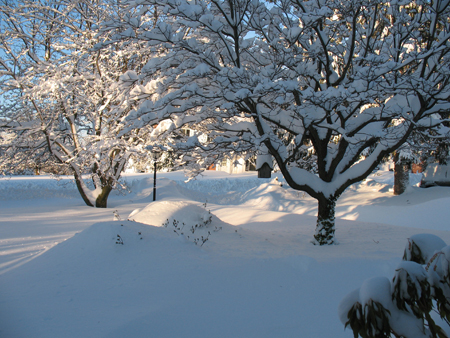
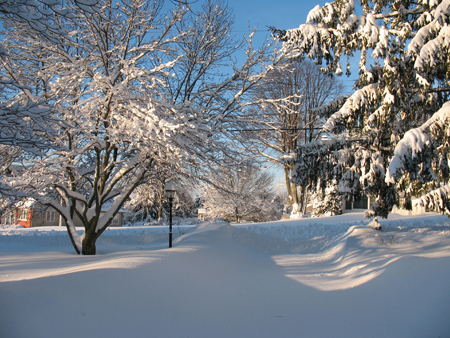
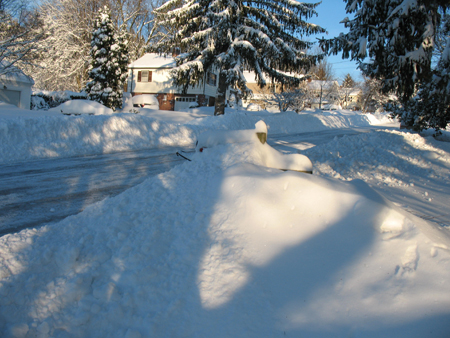
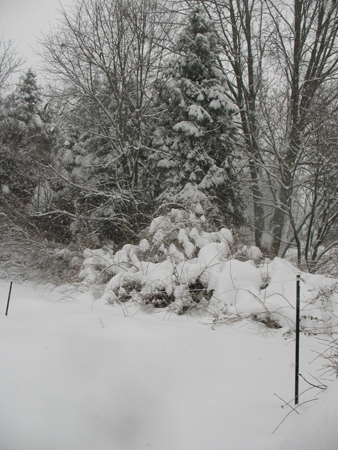
Update from Snowmageddon. After two days, most of the driveway is shoveled. At this point, I’m hoping one of the neighbors will come over with a snowplow….but at least there’s not much left. That’s if my back will hold up. They say another snow coming in on Tuesday, which is about when I’ll have gotten the truck out for the first time. 

front walkway

all the animals and birds are sleeping

two days worth of shoveling, one to go

Posted in Daily meanderings | Tagged , , , , , | Leave a comment